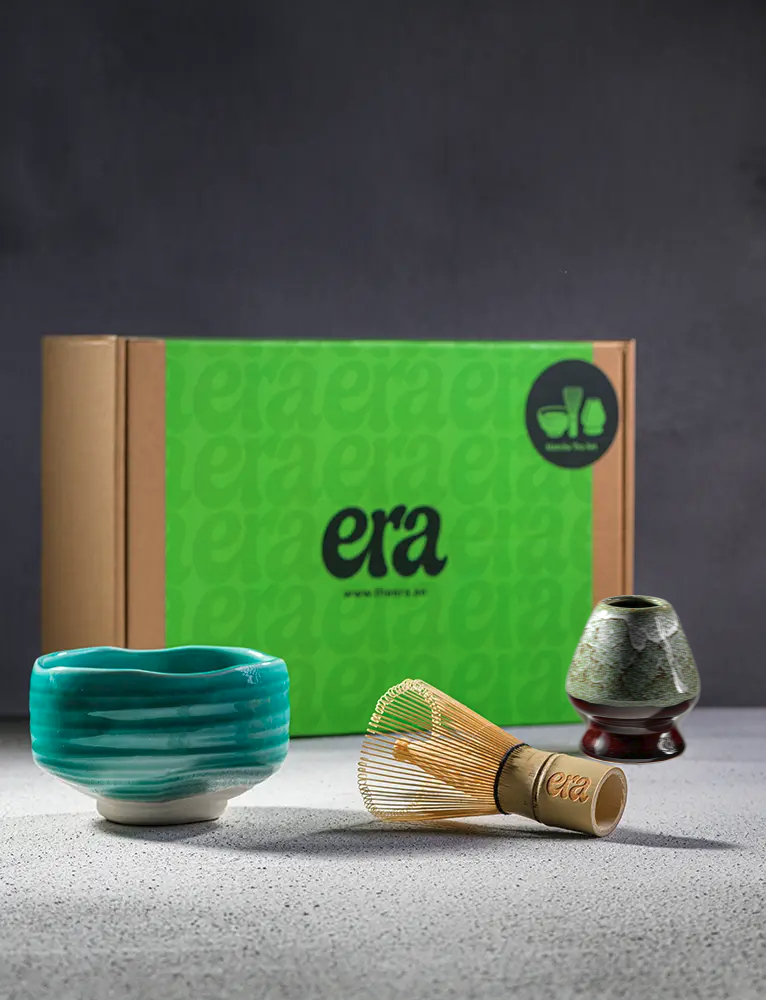
By The Era Store, a small-batch specialty coffee roaster in Dubai that also sells ceremonial grade Uji matcha.
A home espresso machine is one of the few things you can spend 2,000 AED or 30,000 AED on and be right both times. It's also a purchase the internet loves to complicate: boilers, bars, PIDs, portafilter sizes, and a forum thread arguing about each of them. Plenty of people put off the decision for months, or buy whichever one looks nicest and hope for the best.
We get asked the same questions all the time, so we wrote the answers down. Below you'll find how espresso machines work, which type suits the way you drink, what's worth paying for, how to keep a machine running on Gulf water, and how to pull a decent shot in your first week. Jump to your question or read it all the way through.
Jump to Your Question
- Do you need one?
- What espresso is
- Why the grinder matters
- Boiler types, explained
- Built-in grinder or separate?
- Manual, assisted, automatic
- How much to spend
- Which machine fits you
- Water in the UAE
- Cleaning and descaling
- Dialing in your first shot
- Steaming milk
- Sour, bitter, or gushing?
- What to buy with it
- How to spot a bad deal
- Paying in installments
- The machines we stock
- FAQ
Do You Need an Espresso Machine?
Not everyone does. If you drink your coffee black and love clarity and fruit, a pour over cone, a grinder, and a bag of filter roast will make you happier than any machine, for a fraction of the money. We said as much in our coffee guide, and we meant it.
A machine earns its counter space when one of these sounds like you: your order is a flat white, a latte, a cortado, or an iced latte, because every one of those needs real espresso underneath the milk; you're buying one or two cafe coffees a day and have started doing the math; you like making things with your hands; or your house is the one everybody ends up at.
On the money side: a flat white in a UAE cafe runs around 20 to 25 AED. Two a day is roughly 1,300 AED a month. The same two drinks at home, with freshly roasted specialty beans and good milk, come to around 6 AED each at today's prices. A mid-range machine pays for itself well inside a year, and keeps saving you money after that.
Worth saying early: the machine matters less than people think. Most of the flavor comes from the beans, the grinder, and how you use them. A good machine at any price holds temperature and pressure steady and leaves the rest to you.
What Is Espresso?
Espresso is a way of brewing coffee, not a type of bean or a roast level. Hot water, around 93°C, is pushed through a compact puck of finely ground coffee at roughly 9 bars of pressure for 25 to 30 seconds. What comes out is small, dense, and syrupy, with a layer of crema on top, and it's concentrated enough to carry a whole cup of milk without disappearing.
Every espresso machine ever built has the same three jobs: hold water at a stable temperature, push it through the coffee at steady pressure, and make steam for milk. A 2,000 AED machine does all three. So does a 30,000 AED one. What changes as you move up is how steadily, how quickly, and how many times in a row.
A quick word on the numbers printed on boxes. Pump ratings of 15 or 20 bars describe the most the pump can produce. The shot itself is brewed at around 9.
Why Does the Grinder Matter as Much as the Machine?
This is the most important section in the guide.
Espresso is the least forgiving way to brew coffee. The water is only in contact with the grounds for half a minute, under pressure, so a grind that's slightly too coarse gives you a fast, sour shot, and slightly too fine gives you a slow, bitter one. Adjusting the grind is how you steer. The machine has almost no say in it.
That means an espresso grinder has to do two things well: grind fine enough, and let you move in very small steps. Blade grinders can't do either. Pre-ground coffee can't be adjusted at all, and it goes stale within minutes of grinding, which is why it pours out fast and pale no matter what machine it goes into.
Most people in coffee will tell you to spend as much thought on the grinder as on the machine, and they're right. A modest machine with a good grinder makes better espresso than an expensive machine with a poor one.
Your options: a machine with a grinder built in (more on that below), or a separate one. For home espresso we stock the Sage Smart Grinder Pro, the Lelit William with its 64mm flat burrs, the Mahlkönig X54 and single-dose X64 SD, and the La Marzocco Pico. Any of them will keep up with any home machine on this page.
Single Boiler, Heat Exchanger, or Dual Boiler? Heating Systems Explained
This is the part of every spec sheet that loses people, and it's simpler than it looks. Brewing wants water at around 93°C. Steaming milk wants it much hotter. The four designs below are just four ways of dealing with that gap.
On-demand heating (ThermoJet and thermocoil). No boiler at all. Water is heated as it flows through the machine, so there's nothing to wait for: Sage's ThermoJet machines are ready in about three seconds. You brew, then the machine switches over and steams. Ideal for one to three drinks at a time and for anyone who isn't going to plan their coffee twenty minutes ahead. The Bambino Plus, Barista Pro, Barista Touch Impress, and Oracle Jet all work this way.
Single boiler. One boiler does both jobs, at two temperatures. You pull your shot, flip to steam, wait a moment for the boiler to heat up, then steam. It's a small pause, and for people who mostly drink espresso with the occasional cappuccino it barely registers. The Lelit Victoria and Lelit Kate are single boilers with PID temperature control, which keeps the brew water far steadier than older machines of this type.
Heat exchanger. The classic Italian answer. One large boiler sits at steam temperature all the time, and the brew water travels through a tube inside it, picking up heat on the way to the coffee. You can brew and steam at the same moment. The traditional weak spot was brew temperature wandering between shots; the Lelit MaraX3 deals with that using a dual probe PID, and adds electronic flow control on top.
Dual boiler. One boiler for brewing, one for steam, each held at its own temperature. The most stable setup, and the one that shrugs off six milk drinks in a row when people come over. The Lelit Bianca, Sage Oracle Dual Boiler, La Marzocco Linea Mini R, and GS3 are all dual boilers.
Warm-up time. On-demand machines are ready in seconds. Boiler machines need longer: under ten minutes for a compact single boiler like the Victoria, and up to half an hour for the larger machines, which have a lot more metal to heat through. A schedule or a timer solves it. If you know you won't remember to switch it on early, an on-demand machine is the safer pick.
Should You Get a Machine with a Built-In Grinder?
For most first machines, yes. Built-in grinders on these machines are good, not a compromise.
The case for built-in: one purchase, one footprint, one power socket, and a workflow where beans go in the top and espresso comes out the bottom. The Sage Barista range and the Lelit Kate are built around this, and their grinders are matched to the machine they sit on.
The case for separate: you can upgrade one half without replacing the other, you can grind for filter coffee as well as espresso, and if you already suspect you're the type to get deep into this, a standalone grinder gives you more room to grow.
If you want the simplest setup, get the built-in. If you think you'll want to upgrade parts or brew filter coffee too, go separate.
Manual, Assisted, or Automatic: How Much Should the Machine Do for You?
All three make real espresso, from fresh beans, through a real portafilter. The difference is how many of the steps are yours.
Manual. You grind, dose, tamp, time the shot, and steam the milk by hand. There's a learning curve of a week or two, and then it becomes the best ten minutes of your morning. The Barista Express, every Lelit, and every La Marzocco live here.
Assisted. The machine takes over the two steps that go wrong most often. On the Barista Express Impress, the dose is measured and tamped for you at a consistent 10 kg, and you still steam the milk yourself. On the Bambino Plus, it's the other way around: you prepare the shot, and the wand textures the milk on its own.
Automatic. The Oracle Jet and Oracle Dual Boiler grind, dose, tamp, and texture milk by themselves. The Jet even flags a shot that ran too fast or too slow and tells you which way to move the grind. You press a button and wait.
Think about who else in the house will use it. If someone just wants a latte at 7am without learning to tamp, an assisted or automatic machine will get used a lot more.
How Much Should You Spend on a Home Espresso Machine?
Rough bands, in AED, based on what we stock today.
Around 2,000 to 3,500. Compact on-demand machines, with or without a grinder built in. If the machine has no grinder, keep room in the budget for one. This is where most people start, and plenty never feel the need to leave.
Around 3,500 to 7,500. PID single boilers, the heat exchanger class, and the assisted and automatic machines with touchscreens. More steam power, more stability, more help or more control, depending on which way you lean.
Around 10,000. Home dual boilers. Brew and steam together, back to back, with room to play with pre-infusion and flow.
20,000 and up. Cafe engineering scaled down for a kitchen. Machines built from commercial parts, designed to be serviced rather than replaced, and to still be pulling shots when your kids move out.
What more money buys: temperature that holds shot after shot, stronger and drier steam, brewing and steaming at the same time, heavier build and easier servicing, quieter pumps, and finer control over the shot.
What it doesn't buy: better beans, a better grind, or better technique. A carefully dialed 2,000 AED setup with freshly roasted coffee will make better espresso than a 30,000 AED machine fed from a bag roasted last year.
Budget for the whole setup, not just the machine: a grinder if there isn't one built in, a scale, a milk jug, a knock box, and the beans themselves. On that last one, many of the machines we sell ship with 1 kg of our freshly roasted beans, about a month of coffee, so your first weeks of practice are on us. The product page will tell you which.
Which Espresso Machine Fits How You Drink?
Skip the word best and start with your actual mornings.
One or two milk drinks, no fuss, out the door. A Bambino Plus with a grinder beside it, or a Barista Pro or Barista Express Impress with the grinder built in. Ready in seconds, small on the counter.
You want to learn the craft. The Barista Express, the Lelit Victoria, or the MaraX3. Hands-on machines where every change you make shows up in the cup.
A household of different orders. The Barista Touch Impress or the Oracle Jet. Guided screens, automatic milk, and nobody has to take a course to get a latte.
You mostly drink iced lattes. Most of us do here for eight months of the year. Any machine on this page does it well: pull the shot, pour it over ice and cold milk. The Touch Impress and Oracle Jet go a step further with cold espresso and cold brew settings built in.
Straight espresso, and you like to tinker. The MaraX3, the Bianca, or the GS3 MP, where you control the flow of water through the shot yourself and can taste the difference when you do.
You host, a lot. A dual boiler: the Bianca, the Oracle Dual Boiler, the Linea Mini R, or the GS3 AV. Six flat whites in a row without the machine catching its breath.
A small counter. The Bambino Plus, at under 20 cm wide, or the Victoria at 23 cm. Either fits where a kettle does.
A cafe, an office, or a coffee cart. Different conversation entirely. We supply the Linea Classic S and Strada S, commercial grinders from Mahlkönig and La Marzocco, and Puqpress tampers, along with the coffee and matcha to go through them. Our wholesale page is the place to start.
Every machine above, with current prices and full specs, is in our machines collection.
What Water Should You Use in an Espresso Machine in the UAE?
Scale kills more espresso machines than anything else, and scale comes from water. This section will save you more money than any other on the page.
Most tap water here begins as desalinated seawater with minerals added back, and what finally reaches your kitchen depends a lot on your building's tanks and pipes. Most of us cook and drink with bottled or filtered water anyway, so the real question is which bottle, or which filter.
Not too hard. Mineral-heavy water leaves limescale inside boilers, heating elements, and valves. It builds up over months, then shows up as weak steam, odd noises, and a repair bill.
Not too empty. Distilled or zero-mineral water sounds like the safe choice and isn't. Espresso made with it tastes flat, because minerals are part of how flavor gets extracted, and some machines rely on the minerals in the water to sense the water level, so they can misbehave without them.
In between. Read the label. Bottled waters sold here range from very low in minerals to surprisingly high, and thirty seconds with the back of the bottle is worth it. Total dissolved solids somewhere around 75 to 150 mg/l is the zone most machine makers are comfortable with, but your manual has the final word.
Our own machines run on ordinary bottled drinking water, the same one we drink.
Two habits on top of that. Use the in-tank filter or softener that came with your machine and replace it on schedule, because a spent filter does nothing. And if you ever plumb a machine into the mains, a proper filtration cartridge is part of the installation, not an optional extra.
Worth knowing: scale damage is usually excluded from warranties. It counts as maintenance, and maintenance is yours.
How Do You Clean and Descale an Espresso Machine?
Less work than people fear. About two minutes a day, ten minutes a week.
After every shot: knock out the puck, run a second of water through the group, wipe the basket dry.
After every milk drink: wipe the steam wand and purge it, immediately. Milk bakes onto a hot wand in seconds and is a misery to remove later.
End of the day: empty the drip tray, and if your machine supports it, a quick backflush with plain water.
Weekly, or when the machine asks: backflush with espresso machine cleaner or the manufacturer's cleaning tablet, soak the baskets and portafilter, and wipe the shower screen. Coffee oils go rancid, and yesterday's oils are in today's shot.
Every couple of months: replace the water filter, and descale when the machine prompts you or the manual says so. One caution: on larger boiler machines, many makers would rather you prevent scale with the right water than pour descaler into the boiler at home. Check the manual first.
The grinder: brush out the burrs and chute every few weeks. Never wash burrs with water.
And a local one. If you're traveling for a few weeks over summer, empty the tank and the drip tray before you leave. A closed apartment in August grows things.
How to Dial In Your First Espresso Shot
Dialing in means finding the grind setting where a particular coffee tastes right on your machine. It takes six steps.
- Start with fresh beans that have rested for up to 7 to 10 days after roasting. For a first dial-in, pick something forgiving: our Brazil Vale Dourado is chocolatey, low in acidity, and tastes good even when you're slightly off.
- Weigh your dose. 18g is the usual for a double basket, but check what yours is rated for.
- Distribute the grounds evenly and tamp level. Level matters far more than force.
- Put your cup on a scale, start the shot, and stop it at 36g of espresso. That should take 25 to 30 seconds from the moment the pump starts.
- Taste it, then change only the grind. Fast and sour: go finer. Slow and bitter: go coarser.
- Once the time and the taste are close, leave the grind alone and play with the yield. A shorter shot, around 27g, is heavier and more intense. A longer one, around 45g, is lighter, with more clarity.
Expect to throw away the first five or six shots of any new coffee. That's normal, and it's why a kilo of beans comes with so many of our machines. Cafe baristas go through the same process every morning before opening.
Also, the right setting changes over time. As a bag ages over a couple of weeks, shots start running faster, and you'll nudge the grind a little finer to keep up. That's normal, and it takes ten seconds.
How to Steam Milk for a Flat White or Latte
Good milk is glossy, pourable, and sweet, with bubbles too small to see. To do it by hand:
- Start with cold milk in a cold jug, filled to just below where the spout begins.
- Purge the wand, then place the tip just under the surface, slightly off center.
- Open the steam fully. For the first few seconds, keep the tip right at the surface so it makes a soft paper-tearing sound. That's air going in.
- When the jug feels hand-warm, sink the tip a little deeper and let the milk spin in a whirlpool. No more air now, just heat and texture.
- Stop when the jug is too hot to hold for more than a second or two, around 60 to 65°C.
- Wipe and purge the wand, tap the jug on the counter, swirl until it shines like wet paint, and pour straight away.
Whole milk is the easiest to learn on. For oat, the barista versions are made to stretch and hold, and the regular ones mostly aren't. And if all of this sounds like too much before 8am, the machines with automatic wands do a good job of it for you.
Why Is My Espresso Sour, Bitter, or Gushing?
Most bad shots come down to one of six problems, and each one is fixable.
Sour, sharp, and fast. Under-extracted. The water ran through before it could pull enough out. Grind finer.
Bitter, harsh, and dripping slowly. Over-extracted. Grind coarser. If the machine chokes and barely anything comes out, you've gone much too fine, or the basket is overfilled.
Spraying, or pouring from one side. Channeling. The water found a weak spot in the puck and rushed through it. Break up clumps, distribute evenly, tamp level, and check your dose. A naked portafilter shows you where it's happening.
Thin, pale, and no crema. Stale coffee. Crema comes from the gas trapped inside freshly roasted beans, and old or pre-ground coffee has none left to give. No grind setting brings it back. Check the roast date.
Perfect yesterday, off today. Beans age, and humidity shifts how a grinder behaves, which anyone in this part of the world learns quickly. Move the grind one step and try again.
Milk that's bubbly, or a wand that screams. Big bubbles mean the tip sat too high for too long. Screeching means it's too deep with no air going in. Bring the tip back to just under the surface.
The habit worth stealing from professionals, same as with filter coffee: change one thing at a time, taste, then change the next.
What Should You Buy Alongside Your Machine?
The essentials. A scale that fits under your cup, because espresso without one is guesswork. A proper milk jug. A knock box, so pucks stop going into the kitchen bin one drip at a time. A brush and a couple of cloths that live next to the machine.
The upgrades that earn their keep. A solid tamper if the one in the box is light plastic. A distributor for an even bed every time. An Airscape canister to keep the beans you're not using this week in good shape. You'll find all of it among our coffee accessories.
One tip that's free. Check which filter baskets came in your box. Dual-wall (pressurized) baskets are made for pre-ground coffee, and they force a crema out of almost anything. Single-wall baskets are the ones to use with fresh beans and a burr grinder, because they let the coffee and your grind setting do the work. Some machines include both, some only one type.
How to Spot a Bad Deal on an Espresso Machine
Machines are expensive, heavy, and full of water and electricity, so where you buy one matters almost as much as which one you buy. Check these points with any seller, including us.
Signs of a good purchase: a UAE-spec machine, 220 to 240V with a three-pin Type G plug; a warranty that's valid in the UAE, in writing, from an authorized retailer; parts and service available in the country; a sealed box with a serial number; and a human you can message when your first shots go sideways.
Red flags: a 110 to 120V machine brought in from the US, which won't run here without a heavy transformer and usually has no local warranty at all; a price far below everyone else's, which almost always means an unofficial import, an older generation, or an opened box; a new machine with no box or no serial; and a seller who can't tell you who services it.
A good question to ask: if this breaks in month fourteen, what happens? A good seller answers in one sentence.
Can You Pay for an Espresso Machine in Installments?
Yes. Tabby is available at our checkout, so you can split the cost of a machine into installments instead of paying it all at once, subject to Tabby's own approval and limits.
Whether you should is up to you. A machine that replaces a daily cafe habit is one of the more sensible things to spread out, because the money it saves each month is real. We'd avoid stretching to a bigger machine than you need just because the monthly payment looks small. Buy the machine that fits your mornings. We'd rather sell you the right one than the expensive one.
About the Machines We Stock at Era
We started selling machines for the same reason we started roasting: we wanted a shop that tells people plainly what they need and what they don't. We only stock machines we'd buy again ourselves.
That's why the range is short, and why it's organized by character rather than by rank.
Sage. Fast heat-up, smart guidance, and as much or as little automation as you like, from the compact Bambino Plus to the Oracle Dual Boiler. The easiest way into real espresso, and for many people all the machine they'll ever want.
Lelit. Made in Italy, stainless steel bodies, hands-on, and built around precise temperature control: the Victoria, Kate, MaraX3, and Bianca. We're an authorized Lelit retailer in the UAE, and their machines carry a 2-year UAE warranty.
La Marzocco. Handmade in Florence, with the same engineering you'll find behind cafe counters, sized for a kitchen in the Linea Mini R and GS3, and at full scale in the Linea Classic S and Strada S for businesses.
Beside them sit grinders from Mahlkönig, Lelit, La Marzocco, and Sage, and Puqpress tampers for anyone chasing absolute consistency. The full range is in our machines collection.
Which one is right depends on how you drink, who you're making coffee for, and how hands-on you want to be. If you're stuck between two, message us with your usual order and your counter space, and we'll tell you which we'd pick, even if it's the cheaper one.
And since a machine is only ever as good as what goes into it, a subscription keeps freshly roasted coffee arriving before your last bag runs out.
From farm to form.
Frequently Asked Questions
What is the best espresso machine for home use?
The one that matches how you drink. For quick milk drinks, a compact on-demand machine like the Sage Bambino Plus or Barista Pro. For learning the craft, a hands-on machine like the Barista Express or a Lelit. For a busy household or frequent hosting, an automatic or dual boiler machine. Fresh beans and a good grinder matter more than the machine itself.
How much does a good home espresso machine cost in the UAE?
Capable machines start at around 2,000 AED. Most home setups land between 2,000 and 7,500 AED, home dual boilers sit around 10,000 AED, and cafe-grade machines for the home start at about 20,000 AED. If the machine has no built-in grinder, budget for one.
Do I need a separate grinder for espresso?
You need a burr grinder that can grind fine and adjust in small steps, either built into the machine or standing beside it. Pre-ground coffee and blade grinders can't be adjusted for espresso, and ground coffee goes stale within minutes.
What is the difference between a single boiler and a dual boiler espresso machine?
A single boiler brews and steams from one boiler at two temperatures, so you wait briefly between pulling the shot and steaming milk. A dual boiler has one boiler for each job, so you can do both at once, back to back, with very stable temperature.
What is a heat exchanger espresso machine?
A machine with one large boiler kept at steam temperature, with the brew water heated as it passes through a tube inside that boiler. It lets you brew and steam at the same time, and it's the classic Italian design.
Is a La Marzocco worth it for home?
If you want a machine built from commercial parts, with powerful steam and the kind of serviceability that lasts decades, yes. It isn't required for great espresso, though. A well-dialed machine at a fraction of the price, with fresh beans, makes excellent coffee.
What water should I use in my espresso machine in the UAE?
Bottled or filtered water with a moderate mineral content, roughly 75 to 150 mg/l of total dissolved solids, unless your manual says otherwise. Avoid very hard water, which causes scale, and avoid distilled or zero-mineral water, which tastes flat and can confuse some machines' water sensors.
How often should I descale my espresso machine?
When the machine prompts you, or as the manual recommends, which for most home machines is every two to three months depending on your water. Replace the in-tank water filter on schedule. On larger boiler machines, check the manual before descaling at home.
Why is my espresso sour?
The shot is under-extracted, usually because the grind is too coarse and the water ran through too fast. Grind finer and aim for about 36g of espresso from 18g of coffee in 25 to 30 seconds. If it's bitter and slow instead, grind coarser.
Why does my espresso have no crema?
Almost always stale coffee. Crema comes from gas trapped in freshly roasted beans, so old or pre-ground coffee produces thin, pale shots on any machine. Buy beans with a printed roast date and grind just before brewing.
How long does a home espresso machine take to heat up?
On-demand machines like Sage's ThermoJet range are ready in a few seconds. Compact single boilers take under ten minutes, and larger heat exchanger and dual boiler machines can need up to half an hour, which a timer or schedule takes care of.
Can I make iced lattes with an espresso machine?
Yes, with any of them. Pull the shot and pour it over ice and cold milk. Some machines, like the Sage Barista Touch Impress and Oracle Jet, also have cold espresso and cold brew settings.
Can I pay for an espresso machine in installments?
Yes. Tabby is available at checkout at The Era Store, so you can split the payment into installments, subject to Tabby's approval and limits.
Ready to choose? Browse our espresso machines and grinders, or message us with how you drink and we'll help you narrow it down. Whichever one lands on your counter, our freshly roasted beans are ready for it. And when the afternoon comes, you know where the matcha is.