By The Era Store, small-batch coffee roasters and purveyors of single-origin ceremonial grade Uji matcha.
Matcha has never been bigger, and it has never been harder to buy well. Prices have doubled, tea shops in Kyoto and Tokyo are rationing tins, and a flood of dull green powders are wearing labels they haven't earned. Somewhere between the viral videos and the suspiciously cheap ceremonial pouches, one question keeps coming up: what actually is matcha, and how do you know if you're getting the real thing?
This guide answers everything. What matcha is, where it came from, how it's made, why the world is suddenly short of it, and how to prepare, store, and judge it like someone who knows. Pick the question you came for, or read it top to bottom like the matcha nerds we are.
Jump to Your Question
- What is matcha?
- Matcha vs green tea
- A short history
- Why Uji is the best
- How matcha is made
- Ceremonial grade, explained
- The global shortage
- What good matcha tastes like
- Caffeine: matcha vs coffee
- The benefits
- How to make matcha
- The matcha latte
- Bitter, clumpy, no foam?
- The tools
- Storage in the Gulf
- How to spot fakes
- What about hojicha?
- The matcha we source
- FAQ
What Is Matcha, Exactly?
Matcha is stone-ground green tea powder made from whole, shade-grown tea leaves. That last part is the key. With regular tea, you steep the leaves in water, throw the leaves away, and drink what is left behind. With matcha, nothing is left behind. You whisk the finely milled leaf directly into water and drink the entire leaf.
That single difference changes everything: the flavour, the texture, the nutrition, and the ritual.
Matcha isn't a modern invention or a wellness fad. It's a centuries-old Japanese practice of precision, patience, and hospitality. Every bowl carries the principle of ichigo ichie, one moment, one meeting: the idea that each cup is an encounter that will never happen the same way again. In a year when your feed is full of green drinks, it's worth remembering that the real thing was refined by tea masters, not algorithms.
True matcha is judged like an art form: by its aroma, its vibrant jade colour, and its silky texture. As you're about to learn, getting those three things right takes a staggering amount of work, which is also exactly why the world is currently running short of it.
What Is the Difference Between Matcha and Green Tea?
Short answer: all matcha is green tea, but almost no green tea is matcha.
Both come from the same plant, Camellia sinensis. The difference is in how the leaves are grown, processed, and consumed.
Regular green tea (like sencha): grown in full sunlight; leaves are steeped in water, then discarded; you drink an infusion, water that has touched the leaf; lighter body, grassier and more astringent flavour.
Matcha: shade-grown for weeks before harvest, which supercharges the leaves with chlorophyll and amino acids; steamed, dried, de-stemmed, and stone-milled into an ultra-fine powder; you consume the whole leaf, its full flavour, nutrients, and energy; creamy, full-bodied, naturally sweet, and rich in umami.
Think of it this way: steeping green tea is like boiling vegetables and drinking the water. Matcha is eating the vegetables. Same plant, completely different experience.
One technical detail worth knowing, because it matters more in 2026 than ever: true matcha can only be made from tencha, a special shade-grown, de-stemmed leaf prepared specifically for grinding. Powdered sencha isn't matcha, no matter what the label says, and with demand outrunning supply, mislabelled powders are increasingly common. We show you how to tell the difference further down.
Where Does Matcha Come From? A Short History
Powdered tea began in China during the Tang and Song dynasties, where leaves were steamed, pressed into bricks, ground, and whipped in hot water. In 1191, the Zen monk Eisai returned to Japan from China carrying tea seeds and this powdered-tea method. Two decades later he wrote Kissa Yojoki, Drinking Tea for Health, Japan's first book on tea. China eventually moved on to steeped loose-leaf tea. Japan didn't, and Japan is where matcha became matcha.
Zen monks adopted the drink for its rare combination of calm and alertness, using it to stay focused through long hours of meditation. Over the following centuries, the preparation of matcha evolved into chanoyu, the Japanese tea ceremony, a choreography of respect, presence, and hospitality perfected by tea masters like Sen no Rikyu in the 16th century. Rikyu's aesthetic of wabi, finding beauty in simplicity and imperfection, still shapes how the finest matcha is grown, prepared, and served today.
And where did the finest leaves come from? Uji, a small river-basin region south of Kyoto. Uji's tea farmers pioneered the shading techniques still used worldwide and have supplied matcha to emperors, shoguns, and tea masters for roughly 800 years. When people talk about authentic matcha, Uji isn't part of the story. It's the story.
The farm we source from at Era has been part of this lineage for 160 years, producing matcha in the same tradition that began in the Edo period. More on that below.
Why Is Uji Matcha Considered the Best in the World?
Ask any tea master where the world's finest matcha comes from and you will get one answer: Uji, Kyoto.
For over eight hundred years, Uji has been the standard every other matcha region is measured against. Emperors drank it, shoguns fought over it, and tea masters built the ceremony around it. That reputation rests on three things.
Terroir. Uji sits in a basin where the Uji River meets rolling hills south of Kyoto, with morning mists, high humidity, mild temperatures, and fertile, well-drained soil. This microclimate produces leaves with extraordinary natural sweetness and depth: smooth, creamy, rich in umami, free of the harsh bitterness found in matcha from lesser regions.
Cultivars. Most Japanese tea is grown from a single workhorse cultivar called Yabukita. Uji's heritage farms cultivate rarer varieties bred specifically for matcha, prized for their vivid colour, dense umami, and delicate sweetness. These cultivars are lower-yielding and harder to grow, which is part of why genuine Uji matcha has always been scarce, shortage or no shortage.
Eight centuries of mastery. Uji's farmers didn't just adopt matcha cultivation, they invented much of it, including the shading techniques now copied worldwide. The knowledge of exactly when to shade, when to pick, how long to steam, and how slowly to mill has been passed down through generations of family farms, some of which, like the 160-year-old farm we partner with, are now in their sixth generation.
You can taste the difference between Uji matcha and generic matcha the way you can taste the difference between fresh-roasted single-origin coffee and a dusty supermarket tin. We'd know. We do both.
How Is Matcha Made? From Tencha Leaf to Powder
Real matcha starts long before the grinding. Here's the journey from field to tin.
1. Shading (3 to 4 weeks before harvest). Tea plants destined for matcha are covered with shade nets or traditional reed-and-straw canopies and grown in near darkness. Starved of direct sunlight, the plant responds by producing more chlorophyll, which gives matcha its electric green colour, and more amino acids like L-theanine, which give it its deep, mellow umami and natural sweetness. This step is what separates matcha from every other green tea on earth. It's also expensive and labour-intensive, which is a big part of why farmers can't simply grow more matcha overnight.
2. First harvest (ichibancha). Only the tender, first-flush spring leaves are picked, the youngest, sweetest, most nutrient-dense leaves of the year. On heritage farms the finest leaves are still picked by hand. Later harvests produce duller, more bitter leaves that end up in cheaper grades.
3. Steaming. Within hours of picking, the leaves are steamed to halt oxidation and lock in their fresh colour and aroma.
4. Becoming tencha. The leaves are dried in a brick tencha furnace, then stripped of their stems and veins, leaving only the soft inner leaf. This refined material is called tencha, the raw ingredient of all true matcha, and the very thing the world is currently short of.
5. Stone-milling. The tencha is ground between granite stone wheels into an ultra-fine powder, and when we say slowly, we mean it: about one hour to produce just 30 grams of matcha. Grinding any faster generates heat that scorches the aroma and dulls the colour. This deliberate pace is why genuine stone-ground matcha feels silky between your fingers and whisks into a stable, creamy foam, and why machine-pulverised imitations never quite do.
Every step is a dialogue between precision and patience. Skip or rush any of them and you get green powder, but not matcha.
What Does Ceremonial Grade Matcha Actually Mean?
Ceremonial grade refers to the highest quality tier of matcha, the grade refined enough to be whisked with nothing but water and enjoyed on its own, as it would be in a traditional tea ceremony.
What earns a matcha that title: first-harvest (ichibancha) leaves only; fully shade-grown for maximum umami and vibrant colour; stone-ground, not machine-pulverised; vivid jade-green colour, never dull, yellowish, or army green; smooth, naturally sweet flavour with no aggressive bitterness; ultra-fine, silky texture that produces a creamy foam when whisked.
By contrast, culinary grade matcha is made from later harvests and coarser leaves. It's more bitter and more astringent, fine for baking brownies, not fine for drinking straight.
Within the ceremonial world there is a further distinction worth knowing if you want to sound properly fluent. Usucha, or thin tea, is the everyday preparation: a light, foamy bowl whisked briskly with a chasen. Koicha, or thick tea, is the ceremonial centrepiece: roughly double the matcha in half the water, kneaded rather than whisked into something closer to warm jade syrup. Only the very finest, sweetest matcha can survive koicha, which is why it has traditionally been the true test of a leaf.
One honest note: ceremonial grade isn't a legally regulated term anywhere in the world, and with the current shortage, more mediocre and even culinary powder is wearing the label than ever before. The real test is in the cup: colour, aroma, sweetness, and foam don't lie. We cover how to spot the fakes below.
Why Is Matcha So Expensive Right Now? The Global Matcha Shortage Explained
If you've noticed matcha prices climbing, tins selling out, or your favourite cafe quietly shrinking its matcha menu, you aren't imagining it. The world is in the middle of the most severe matcha shortage in history, and understanding it will make you a much smarter buyer.
Demand exploded faster than tea fields can grow. Matcha went from niche ritual to global lifestyle staple in the space of a few years, powered by cafe culture, wellness trends, and social media. Japan's matcha production roughly tripled between 2010 and 2023, and it still wasn't enough. A tea plant takes around five years from planting to its first proper harvest, so supply physically can't catch up quickly no matter how high prices go.
The shortage is specifically a tencha shortage. This is the detail most coverage misses. Japan isn't running out of green tea. It's running out of tencha, the shade-grown, de-stemmed leaf that true matcha is milled from, which makes up only a small share of total production. The scarcity is concentrated exactly where quality matters most: genuine first-harvest, shade-grown ceremonial leaf.
Prices broke records, then stayed there. At the 2025 Kyoto auctions, tencha prices reached all-time highs at roughly 1.7 times the previous year, and premium Uji lots climbed far higher still. Rather than falling back, prices have held at these elevated levels into 2026, with some auction lots doubling again. In Japan, tea shops in Tokyo and Kyoto have been limiting customers to one tin each. Once raised, Japanese tencha prices historically rarely return to previous levels. The shortage reset the floor, it didn't create a temporary spike.
The farming base is under pressure. The average Japanese tea farmer is around 65 years old, farmland is shrinking, and traditional matcha remains stubbornly resistant to shortcuts: hand-picking, weeks of shading, slow granite milling. The Japanese government is now subsidising farmers to convert fields to tencha, but those new fields won't produce meaningful supply until the end of the decade.
The knock-on effect: a flood of fakes. With genuine ceremonial matcha scarce and expensive, the market has filled with substitutes. Culinary grade relabelled as ceremonial. Powdered sencha sold as matcha. Blends quietly cut with non-Japanese leaf. This is the single most important reason to buy from someone with a direct, named farm relationship rather than an anonymous supply chain.
One genuinely good piece of news: the 2026 spring harvest in Uji was widely reported as one of the finest in decades, with generous spring rainfall producing exceptionally rich leaf. Quality is superb. Scarcity, unfortunately, is here to stay for a while.
Our position at Era is simple. We source directly from one family farm in Uji that we have a real relationship with, we buy what they can genuinely produce, and we never backfill with mystery powder to chase volume. In a shortage, that relationship is everything.
What Does Good Matcha Taste Like?
If your only experience of matcha is bitter green stuff, you've had bad matcha. Here's what genuine ceremonial grade Uji matcha tastes like: naturally sweet, no sugar required; deep, savoury umami, that satisfying, brothy richness (thank the L-theanine); smooth and full-bodied, a silky, almost creamy mouthfeel from the ultra-fine grind; a clean, balanced finish, no harshness, no lingering astringency; and a fresh aroma, vegetal in the best way, like sweet grass and ocean air, with the subtle sweetness Japanese tea people call ooika, the covered fragrance that only shading creates.
The visual matters too: whisked properly, high-grade matcha forms a fine, stable, creamy foam on the surface, like a tiny green cappuccino. Dull colour, no foam, and bitterness are all warning signs you're drinking a lower grade.
Does Matcha Have Caffeine? Matcha vs Coffee
Yes, matcha contains caffeine, and this is where things get interesting for coffee lovers. As coffee roasters, we say this with love.
Matcha contains roughly 19 to 44mg of caffeine per gram depending on the leaf, so a typical 2 gram serving lands around 40 to 90mg, compared to about 95 to 120mg in a standard cup of coffee. A strong koicha or a double-scoop latte can match or exceed a coffee. But the numbers only tell half the story.
Matcha is naturally rich in L-theanine, an amino acid that works alongside caffeine to promote a state of calm, focused alertness. Instead of the sharp spike and crash many people experience with coffee, matcha's energy tends to arrive smoothly and last longer, often described as alert but relaxed. It's exactly why Zen monks drank it before hours of meditation more than 800 years ago, and exactly why the shading process matters so much: shade-grown leaf carries far more L-theanine than sun-grown leaf. Better matcha doesn't just taste better. It feels better.
Our honest take as people who roast coffee and whisk matcha every single day: they aren't rivals, they are teammates. Coffee for the bold morning kickstart, matcha for sustained afternoon focus without wrecking your sleep. Your daily rhythm has room for both, and ours certainly does.
What Are the Benefits of Drinking Matcha?
Because you consume the whole leaf rather than a steeped infusion, matcha delivers a concentrated dose of what the tea plant has to offer.
Antioxidants (catechins, especially EGCG). Laboratory analyses used in clinical research put a standard 2g serving of quality matcha at roughly 170mg of total catechins, including around 105mg of EGCG, most of which a steeped cup of green tea leaves behind in the strainer. Research on green tea catechins has linked regular intake to healthier blood pressure and cholesterol, and nutrition scientists now recommend 400 to 600mg of flavan-3-ols (the family EGCG belongs to) daily from foods like tea. A bowl or two of matcha gets you a meaningful way there.
L-theanine and focus. A 2g serving carries around 50mg of L-theanine, and this isn't folklore: randomised controlled trials have found the theanine-caffeine pairing improves accuracy on attention tasks, a placebo-controlled study found matcha helped young adults hold attention under mild stress, and a 12-month trial in older adults reported improved attention and sleep quality from a daily 2g serving.
Smooth, sustained energy. Caffeine plus L-theanine, without the spike and crash. Japanese research suggests the calming effect depends on the ratio of theanine to caffeine, and shade-growing is precisely what raises theanine. The centuries-old technique that makes ceremonial matcha taste sweeter is the same one that makes it feel calmer. The monks worked out the pharmacology by taste, eight hundred years early.
Chlorophyll. Responsible for that vivid green colour, boosted by weeks of shade-growing.
A built-in mindfulness ritual. Don't underestimate this one. The two minutes it takes to sift, whisk, and sip a bowl of matcha is a small daily ceremony of slowing down, and in 2026 that might be the most valuable benefit of all.
Worth knowing: the shading and first-harvest selection that define ceremonial grade are exactly what maximise L-theanine and chlorophyll content. Quality and benefits go hand in hand. And to be straight with you: matcha is a food, not medicine. The research on green tea compounds is genuinely promising, but no cup of anything replaces a balanced routine. Enjoy it because it's delicious and makes your day better. The rest is a bonus.
How much per day? One or two servings is the sweet spot most people land on. Two bowls at 2g each keeps you around 120 to 180mg of caffeine, comfortably within the roughly 400mg daily level generally considered fine for healthy adults, with room left for a morning coffee. If you're pregnant, sensitive to caffeine, or managing a health condition, your doctor beats any blog, including this one.
How to Make Matcha at Home (Traditional Usucha)
Making traditional matcha, called usucha or thin tea, takes two minutes and zero barista training.
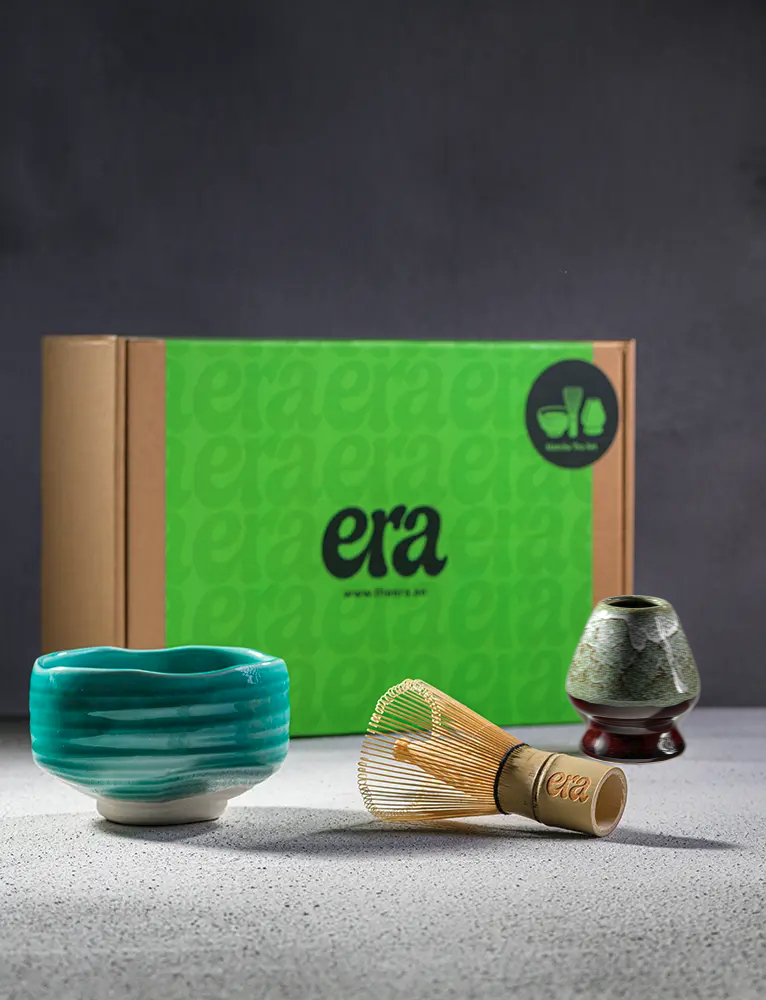
You will need: ceremonial grade matcha, a bowl (chawan), a bamboo whisk (chasen), a small sifter, and hot water.
- Heat about 40ml of water to 80°C, hot but not boiling. Boiling water scalds matcha and turns it bitter. No thermometer? Boil the kettle and let it rest for 2 to 3 minutes.
- Sift 2 to 3g of matcha (about one teaspoon) into your bowl. Sifting breaks up the natural clumps of ultra-fine powder and is the secret to a smooth, lump-free cup. Don't skip it.
- Pour in the water and whisk with the chasen in a brisk W or M motion, from the wrist, not the arm, until a fine layer of foam covers the surface. About 15 to 20 seconds.
- Drink it straight from the bowl while the foam is fresh.
That's it. No machines, no pods, no waiting. Just you, the whisk, and a moment of quiet.
Pro tips: warm your bowl with hot water first (then discard) so your matcha doesn't cool instantly, which also softens the chasen tines so they last longer; whisk fast and light, you're aerating, not stirring soup; fine, tight bubbles mean good technique and good matcha, big soapy bubbles mean whisk faster.
How to Make a Cafe-Style Matcha Latte
The matcha latte is how most people fall in love with matcha: creamy, gently sweet, and gorgeous over ice. Here's the method we use.
- Prepare a matcha shot: sift 2 to 3g of matcha into a bowl, add 40ml of 80°C water, and whisk into a smooth, foamy base.
- Add about 130ml of milk, hot and frothed for a cosy latte, or cold over ice for the iconic layered iced matcha latte. Oat and whole milk are our favourites for their creaminess.
- Whisk or stir briefly to combine.
- Sweeten if desired. A touch of honey or maple works beautifully, though genuinely good ceremonial matcha is naturally sweet enough that many people skip it entirely.
The layered iced latte trick: fill a glass with ice, pour in the milk, then slowly pour the whisked matcha over the top. Green over white, every bit as good as it looks. And living where we do, let's be honest: for eight months of the year in the UAE, iced isn't a variation, it's the default. The good news is that iced preparation is actually kinder to matcha, since cold never scalds the leaf.
One important note: because a latte dilutes the matcha with milk, quality matters more, not less. Cheap matcha hides its bitterness behind sugar. Great matcha carries the drink on flavour alone. This is exactly why we use our own ceremonial grade Uji matcha in every latte recipe we share.
Why Is My Matcha Bitter, Clumpy, or Refusing to Foam?
Ninety percent of I-don't-like-matcha cases trace back to one of four fixable problems. Run through this list before blaming the tea, or yourself.
It tastes bitter or harsh. Three usual suspects, in order of likelihood: your water was too hot (boiling water scalds the leaf, keep it around 80°C), you used too much powder for the water, or the matcha itself is culinary grade wearing a ceremonial label. Fix the first two and taste again. If it's still aggressive, the problem came in the tin.
It's clumpy or gritty. You skipped the sift. Matcha is so finely milled that its particles cling together with static and humidity, and no amount of whisking fully breaks wet clumps apart. Ten seconds with a sifter solves what two minutes of whisking can't. If it clumps stubbornly even after sifting, the powder has likely absorbed moisture, which in our climate usually means the tin spent too long open on a counter.
It won't foam. Foam comes from three things: fine particles, fresh leaf, and fast wrists. Whisk briskly in a W motion from the wrist, keep the chasen tips just under the surface, and don't overfill with water. If your technique is right and the foam still won't build, the matcha is either low grade (coarse, machine-ground powder doesn't foam well) or past its prime.
It tastes dull, flat, or vaguely of hay. That's oxidation. Matcha that sat open, warm, or unrefrigerated loses its brightness within weeks, in colour and in cup. Check our storage rules, and buy in sizes you'll finish within a couple of months.
One pattern worth noticing across all four: good matcha is forgiving to prepare and bad matcha is impossible to rescue. If you follow the basics and the bowl still disappoints, you don't need more technique. You need better tea.
The Tools: What You Need and What You Can Skip
Matcha's equipment list is refreshingly short, and each piece earns its place. Four hundred years of tea ceremony already stripped away everything unnecessary.
Chawan (tea bowl). Wide enough to whisk in, comfortable in two hands. This is the one piece where beauty genuinely matters, because you'll hold it every day. Our matcha bowls are made for exactly this, wide-walled and whisk-friendly.
Chasen (bamboo whisk). The one tool with no good substitute. Around a hundred hand-carved bamboo tines aerate matcha in a way nothing else replicates. Care for it and it lasts months: rinse with warm water only (never soap), shake it dry, and rest it on a whisk stand so the tines keep their curve. Softening the tines in warm water for a minute before whisking extends its life further.
Sifter and scoop. The unglamorous heroes. Sifting is the single biggest upgrade to texture, and a proper scoop or scale keeps your ratio consistent. You'll find both among our matcha accessories.
What you can skip: electric frothers (fine for lattes, but they beat air in rather than aerating, so the foam is coarser), temperature-controlled gadgets (a rested kettle does the job), and anything described as a matcha maker. The ceremony survived four centuries without electricity. It'll survive your kitchen.
If you're starting from zero, or buying for someone who is, our ritual sets bundle the essentials so the first bowl goes right.
How to Store Matcha So It Stays Fresh (Especially in the Gulf)
Matcha is exceptionally sensitive to its four natural enemies: air, light, heat, and humidity. Which, if you live in the UAE, might sound like a description of July. The good news is that with a few habits, your matcha will stay vivid and sweet from first scoop to last.
The golden rules: refrigerate it, don't freeze it, keeping matcha in its original airtight tin in the fridge (in a Gulf summer, the fridge isn't optional, it's essential; a tin left in a hot kitchen, or worse, a hot car, will fade in days); let it reach room temperature before opening, which matters double in our humidity, since opening a cold tin in a warm room invites condensation, so give it 20 to 30 minutes on the counter, sealed, before you open it; seal tightly after every use and return it to the fridge; use only clean, dry utensils when scooping, as a single damp spoon can compromise the whole tin; and store it away from strong-smelling foods, because matcha's superfine particles absorb surrounding aromas like a sponge. Nobody wants garlic matcha.
Daily drinker? Portion a week's worth into a small secondary container so your main tin stays sealed and protected.
How long does matcha last? For peak flavour and vibrancy, enjoy your matcha within about 60 days of opening. Handled with care, refrigerated, sealed, and kept dry, high-grade matcha will still drink beautifully for up to six months. Beyond that it remains perfectly safe, but the flavour grows quieter, a gentle reminder of just how alive this tea really is.
How to Spot Fake or Low-Quality Matcha in 2026
The matcha boom flooded the market with dull, bitter powders wearing fancy labels. The shortage made it dramatically worse. With genuine tencha scarce and expensive, mislabelling has become an industry-wide problem: culinary grade rebranded as ceremonial, powdered sencha sold as matcha, and Japanese-labelled blends quietly cut with leaf from elsewhere. Here's your field guide to telling real from regrettable.
Signs of genuine, high-quality matcha: vibrant jade-green colour, bright, almost electric; origin transparency, with the region (ideally Uji, Kyoto), the farm relationship, and harvest details stated proudly; first harvest or ichibancha on the label; stone-ground production; ultra-fine, silky texture that feels like eyeshadow, not sand; naturally sweet, umami-rich taste with zero added sugar needed; and a stable, creamy foam when whisked.
Red flags: dull, yellowish, or army-green colour (oxidised or late-harvest leaves); vague origin like just Japan, or worse, no origin at all; gritty texture or stubborn clumping; aggressive bitterness or astringency; matcha blends with added sugar, milk powder, or fillers; suspiciously cheap prices, which carries extra weight now, because genuine tencha prices have doubled at auction and hit historic records, one hour of stone-milling still produces just 30 grams, and if a ceremonial matcha in 2026 costs what supermarket powder cost three years ago, the maths simply doesn't work; and a brand that appeared overnight with unlimited stock while heritage producers ration tins. During a raw material shortage, infinite supply is itself a red flag.
The single best test: whisk it with just water and taste it. Great matcha needs nothing else. Bad matcha needs everything else.
What About Hojicha?
A quick word on matcha's mellow cousin, because once people fall for Japanese tea, this is usually their second love. Hojicha is Japanese green tea that has been roasted over high heat, trading the grassy vibrancy of green tea for toasty, caramel-like warmth: think roasted nuts, cocoa, and quiet comfort.
The roasting also leaves it naturally gentle on caffeine, which is why hojicha is Japan's evening tea, served after dinner and even to children. If matcha is your 2pm focus, our hojicha, from the same Uji tradition, is your 8pm wind-down. Whisked into a latte with warm milk, it might be the cosiest drink we know.
About the Matcha We Source at Era
At Era, we approach matcha the same way we approach our small-batch coffee roasting: obsess over the source, respect the craft, and never cut corners.
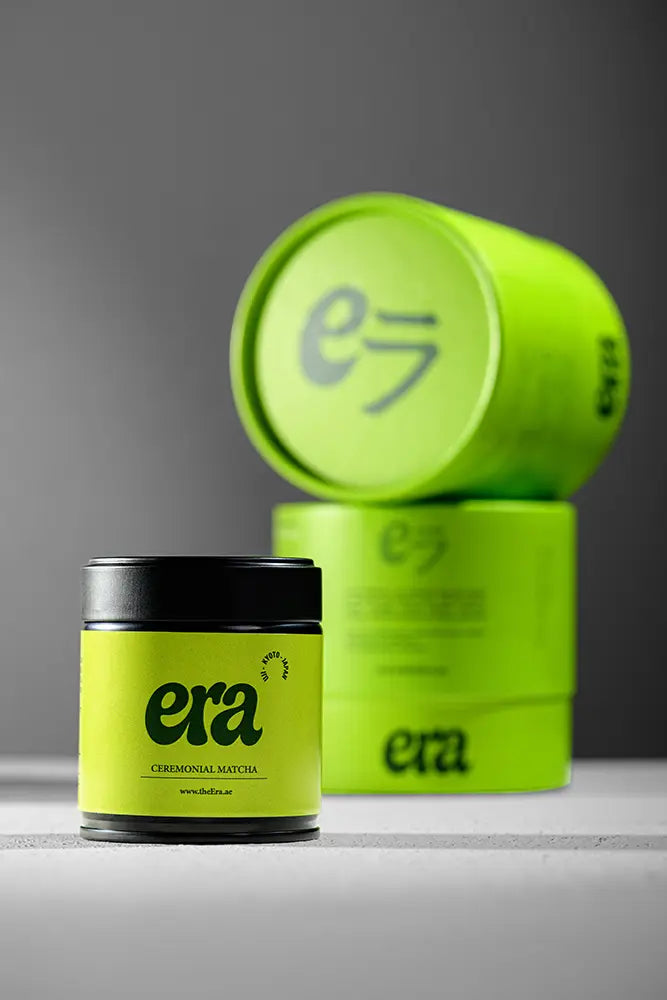
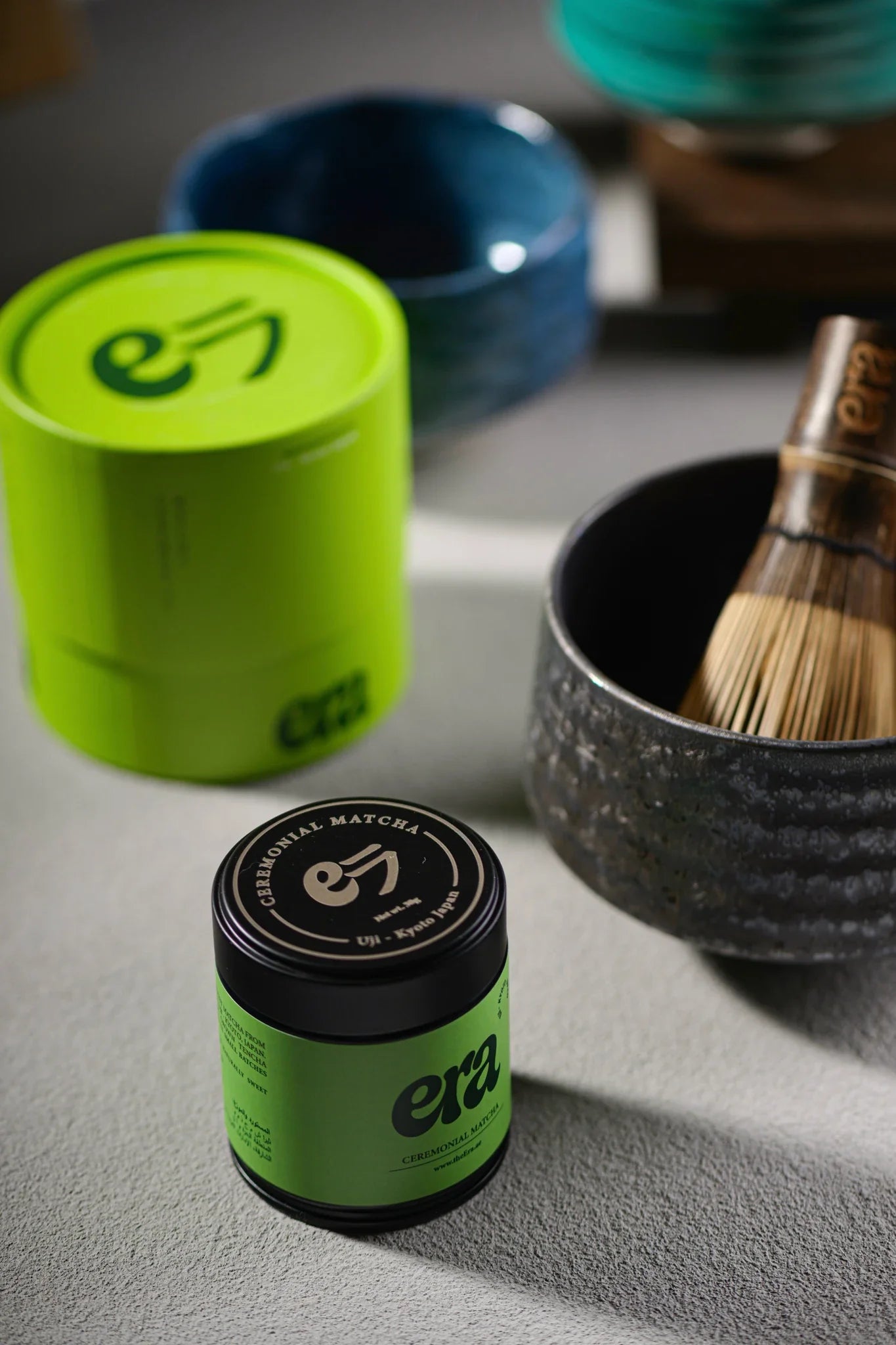
Our ceremonial grade matcha comes directly from a 160-year-old family farm in Uji, Kyoto, a sixth-generation heritage producer crafting matcha in the same tradition that began in the Edo period. Each harvest is guided by mastery, not machinery.
Here's what goes into every tin: single origin, one farm, one region, no blending; first harvest (ichibancha) only, the sweetest leaves of spring; shaded for nearly a month before picking, deepening the chlorophyll and amino acids behind its mellow umami and vivid green hue; hand-picked, steamed, and slowly stone-milled on granite wheels, nearly an hour per 30 grams; no additives, no blends, no shortcuts.
This matcha is exclusive to Era in the UAE. It isn't a white-labelled powder wearing our logo, and you won't find it rebranded under another name no matter how hard you look: it is cultivated and selected specifically for us in Uji. In a year when honest single-origin tencha is the scarcest thing in tea, that direct relationship isn't a marketing line. It's the only reason we can put real Uji matcha in your hands at all.
And because freshness is half of matcha's magic, a subscription keeps a sealed, recently milled tin arriving before your current one fades. In a shortage, it also quietly guarantees your supply.
Bright yet grounded. Pure yet complex. From farm to form.
Frequently Asked Questions
Is matcha healthier than green tea?
Matcha delivers more of the leaf's compounds per cup because you consume the whole leaf rather than a steeped infusion: more catechins, more L-theanine, more chlorophyll.
Why is matcha so expensive in 2026?
A global shortage of tencha, the shade-grown leaf matcha is milled from. Demand has outrun what Japan's tea fields can produce, auction prices hit historic records in 2025 and have stayed elevated, and new tea fields take around five years to mature. Weeks of shading, hand-picking, and stone-milling at 30 grams per hour were never cheap to begin with.
Is there really a matcha shortage?
Yes, specifically of genuine first-harvest ceremonial leaf. Tea shops in Japan have limited customers to one tin each, and heritage producers sell out within weeks of each harvest. Culinary grades remain more available.
Does matcha have more caffeine than coffee?
Usually less. A typical 2g serving of matcha contains roughly 40 to 90mg of caffeine versus about 95 to 120mg in a cup of coffee, but matcha's L-theanine makes the energy feel smoother and longer-lasting.
Can I make matcha without a bamboo whisk?
A chasen produces the best foam, but in a pinch, a small electric milk frother or a tightly sealed jar (shake vigorously) will get you a smooth cup.
What is the best water temperature for matcha?
About 80°C. Boiling water scalds the leaf and creates bitterness.
How much matcha per cup?
2 to 3 grams, roughly one teaspoon, always sifted.
What is the difference between usucha and koicha?
Usucha is everyday thin tea, light and foamy. Koicha is ceremonial thick tea, double the matcha in half the water, kneaded into a rich, syrupy bowl. Only the finest grades can be prepared as koicha.
How much matcha can I drink per day?
One or two 2g servings suits most people, roughly 120 to 180mg of caffeine, well within the roughly 400mg daily level generally considered fine for healthy adults.
Why does my matcha taste bitter?
Usually water that's too hot, too much powder, or culinary grade sold as ceremonial. Keep water around 80°C, sift 2 to 3g, and if it's still harsh, the tea itself is the problem.
Is matcha good for lattes?
Only good matcha is. Ceremonial grade Uji matcha carries a latte on natural sweetness and umami. Cheap matcha hides behind sugar.
Does matcha expire?
It stays safe well beyond its best-by date, but for peak flavour, enjoy it within 60 days of opening and store it refrigerated and sealed, especially in a hot climate.
Ready to taste the difference? Explore our ceremonial grade Uji matcha, single origin, first harvest, stone-ground, and exclusive to Era in the UAE. And if your mornings still belong to coffee, our small-batch roasts will take good care of you until the afternoon whisk.