By The Era Store, small-batch specialty roasters in Dubai and purveyors of ceremonial grade Uji matcha.
Coffee is the most familiar drink in the world and somehow still the most misunderstood. Most people drink it every day without knowing where it grows, why one bag tastes like chocolate and another like blueberries, or why the beans in the supermarket have a best-before date two years away while ours carry a roast date from last week.
This guide answers all of it. What specialty coffee actually means, where coffee came from (spoiler: this part of the world plays the starring role), how it travels from a cherry on a tree to the cup in your hand, why prices went through the roof, and how to brew and store it properly, especially in the Gulf. Pick the question you came for, or read the whole thing like the coffee nerds we are.
Jump to Your Question
- What is specialty coffee?
- A history that starts next door
- From cherry to green bean
- Arabica vs robusta
- What roasting actually does
- Why the roast date matters
- Espresso, filter, omni
- How decaf is made
- Why coffee is so expensive
- What good coffee tastes like
- Caffeine: coffee vs matcha
- Brewing better at home
- The equipment you actually need
- Sour, bitter, or flat?
- Storage in the Gulf
- How to spot stale coffee
- The coffee we roast
- FAQ
What Is Specialty Coffee, Exactly?
Specialty isn't a marketing word. It's a grade.
In the coffee industry, specialty coffee refers to beans that score 80 points or above out of 100 when evaluated by certified graders using the Specialty Coffee Association's standards: no primary defects, clear and pleasant flavours, good sweetness, clean finish. Commodity coffee, the stuff traded in bulk and blended into supermarket tins, sits below that line, where defects are tolerated and beans from hundreds of farms get mixed into one anonymous mass.
The difference starts long before the score sheet. Specialty coffee is typically grown at higher altitudes where cherries ripen slowly and develop more sugars, picked selectively (often by hand, and only the ripe cherries), processed carefully, and traceable back to a region, a washing station, sometimes a single farm. Commodity coffee is strip-picked, ripe and unripe together, and optimised for volume.
Then there's what happens after the farm, and this is where most coffee quietly dies: roasted months before you buy it, ground long before you brew it, and left on a shelf under fluorescent lights. Specialty coffee treats roasting as the second half of the craft, done in small batches, close to the drinker, with a roast date printed on every bag.
Think of it the way you'd think of matcha grades, if you've read our matcha story. Ceremonial grade matcha and specialty coffee are the same idea in two crops: the top of the pyramid, where origin, harvest, and craft are all accounted for, and where the label actually has to prove itself in the cup.
Where Does Coffee Come From? A History That Starts Next Door
Every coffee drinker in the Gulf should know this part, because coffee's story is our region's story.
Coffee begins in the highland forests of Ethiopia, where arabica trees still grow wild and where, legend says, a goatherd named Kaldi noticed his goats dancing after eating red cherries. A good story, probably invented later, but the botany is real: Ethiopia is coffee's genetic homeland, and Ethiopian heirloom varieties remain some of the most prized coffees on earth. Our own Ethiopia Guji Hambela comes from exactly this lineage.
From Ethiopia, coffee crossed the Red Sea to Yemen, and this is where drinking coffee, as a culture, was born. By the 15th century, Sufi monasteries around Mokha were brewing qahwa to stay awake through night devotions. The word coffee itself descends from the Arabic qahwa, through the Turkish kahve. The port of Mokha gave its name to mocha. For roughly two centuries, the entire world's coffee supply passed through Arab hands, and the coffeehouse, the qahveh khaneh, was a Middle Eastern invention long before it was a European one.
Coffee reached Istanbul, then Venice, then the rest of Europe in the 1600s, and colonial powers eventually carried seedlings to Java, the Caribbean, and Latin America, which is how Brazil and Colombia became the giants they are today. But the ritual at the heart of it, gathering over a carefully prepared cup as an act of hospitality, never left this region. Gahwa poured from a dallah remains the first gesture of welcome in any Emirati majlis, a tradition so central that Arabic coffee is inscribed by UNESCO as intangible cultural heritage.
So when Dubai's specialty coffee scene gets described as a new trend, we smile a little. The world's newest coffee culture and its oldest are the same place.
How Is Coffee Made? From Cherry to Green Bean
Here's the thing most people never consider: coffee is a fruit. Every bean you've ever ground was the seed of a small red cherry that grew on a tree, usually on a mountainside, usually picked by hand. The journey from that cherry to your cup has more steps than almost any other thing you consume.
1. Growing. Arabica trees thrive in the coffee belt between the tropics, at altitudes from around 1,000 to over 2,000 metres. Higher and cooler generally means slower ripening, denser beans, and more complex sweetness and acidity. A tree takes three to five years to produce its first proper harvest, which matters enormously for prices, as you'll see later.
2. Picking. On quality-focused farms, cherries are picked selectively: only the fully ripe ones, by hand, with pickers returning to the same trees several times over a season. One tree yields roughly enough cherries for half a kilo to a kilo of roasted coffee per year. Let that sink in the next time a bag feels expensive.
3. Processing. The seed has to be separated from the fruit, and how that's done shapes the flavour profile more than almost anything else. Washed (wet) process: the fruit is removed before drying, then the beans are fermented and washed; the result is clean, bright, and transparent, the truest expression of the bean itself, classic for Ethiopian and Central American coffees. Natural (dry) process: the whole cherry is dried in the sun with the fruit still on, letting the seed absorb sugars and fruit character; the result is heavier, sweeter, often wildly fruity, and this is where those berry-bomb coffees come from. Honey and other hybrid processes: somewhere in between, with part of the fruit left on during drying for extra sweetness and body.
4. Drying, milling, grading. The beans are dried to a stable moisture level, rested, hulled from their parchment skin, then sorted by size, density, and defect count. This is where a coffee earns (or loses) its specialty grade.
5. Export and the green bean. What arrives at a roastery is green coffee: dense, grassy-smelling seeds that look nothing like coffee and taste like nothing you'd want to drink. Everything you love about coffee is still locked inside, waiting for the roaster.
What Is the Difference Between Arabica and Robusta?
Two species dominate the world's cup.
Arabica (Coffea arabica) is the original, the species born in Ethiopia. It's grown at altitude, harder to farm, more vulnerable to climate and disease, and rewarded for the trouble with sweetness, aromatic complexity, and refined acidity. Virtually all specialty coffee is arabica, and everything we roast at Era is 100% arabica.
Robusta (Coffea canephora) is the workhorse: hardier, higher-yielding, grown at lower altitudes, with nearly double the caffeine and a harsher, rubbery bitterness. It fills instant coffee jars and bulks out cheap espresso blends. It has its defenders, and fine robustas do exist, but if a bag doesn't tell you what species is inside, that silence usually means robusta.
The caffeine difference surprises people: robusta carries roughly twice the caffeine of arabica. Caffeine is bitter, which is part of why cheap blends taste the way they do. More caffeine isn't a quality flex. It's usually the opposite.
What Actually Happens When Coffee Is Roasted?
Roasting is where green, grassy seeds become coffee, and it's the part of the chain we obsess over most, because it happens right here in Dubai.
Inside the drum, beans tumble through hot air while hundreds of chemical reactions unfold. Moisture evaporates. Sugars caramelise. Amino acids and sugars collide in the Maillard reaction, the same chemistry that browns bread and sears steak, building sweetness, body, and aroma. Around ten minutes in, the beans audibly pop like popcorn. Roasters call this first crack, and everything after it is called development, the window where the profile of the coffee is decided.
A few extra seconds of development, a few degrees of difference in the curve, and the same bean can taste bright and tea-like or deep and chocolatey. That's why we roast each origin individually rather than running everything through one profile, and why our roasts are guided by sensory cues, timing, and experience rather than a fully automated program. The goal is never to chase extremes. It's to reveal what's already inside the bean.
On roast levels, a quick translation of the words on coffee bags: light roasts preserve the most origin character, florals, fruit, and lively acidity, common for filter coffee; medium roasts balance origin character with caramel sweetness and rounder body, the sweet spot for a lot of espresso and milk drinks; dark roasts trade origin character for roast character, smoke, bitterness, and heavy body. Much of the commodity world roasts dark partly because it hides defects. In specialty, going very dark usually means throwing away what you paid for.
Why Does the Roast Date Matter So Much?
Here's a question worth asking of any coffee you buy: when was it roasted? Not best before. Roasted. If the bag doesn't say, that's your answer.
Coffee isn't shelf-stable in any way that matters for flavour. From the moment roasting ends, two clocks start ticking.
The degassing clock. Freshly roasted beans are full of carbon dioxide, a by-product of roasting. For the first several days, they release it steadily. Brew too soon and that CO2 disrupts extraction, which is why coffee straight off the roaster can taste oddly hollow. This is what the resting stage is for: we cool and rest every batch until the flavours settle into harmony before it's packed. Rushing this compromises balance. Patience refines it.
The staling clock. Once degassing settles, oxygen becomes the enemy. Aromatic compounds fade, oils oxidise, and the cup flattens week by week. It doesn't become unsafe, it becomes boring: cardboard where there was fruit, ash where there was chocolate.
Between these two clocks sits the window every coffee lover should know: roughly 7 to 14 days after roast, when degassing has settled and staling hasn't begun. That's when flavour and structure peak, and it's why we print the roast date on every bag and roast weekly in small batches. When your beans arrive within days of roasting, you get to drink the entire peak window instead of the tail end of it.
This, more than anything else, is the honest advantage a local roaster has over any imported bag, however prestigious the name on it. Freshness doesn't ship well. It has to be roasted near you.
Espresso, Filter, Omni: What Do Coffee Categories Actually Mean?
If you've browsed our beans, you've seen these labels. Here's what they actually tell you.
Espresso roasts are developed for high-pressure, short brews. Espresso extraction is intense and unforgiving, so these coffees are roasted to bring sweetness forward, soften acidity, and hold their own under milk. If your mornings revolve around a machine, this is your shelf.
Filter roasts are developed for gentler methods: pour over, batch brew, AeroPress, French press. Longer contact with water at lower pressure lets delicate flavours shine, so these are roasted lighter to preserve the origin's florals, fruit, and clarity.
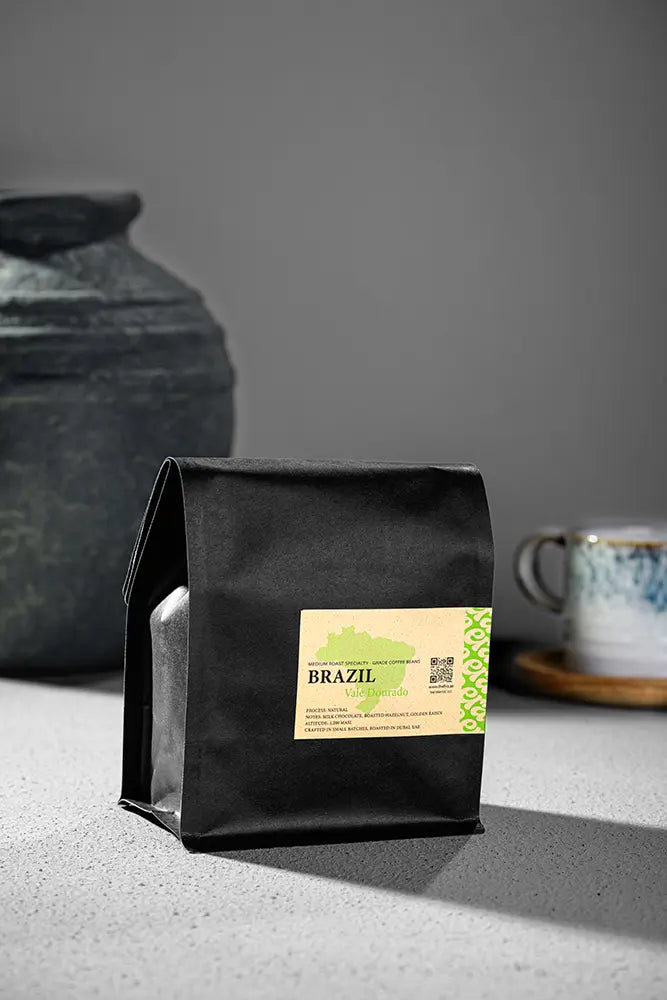
Milk-based coffees are chosen and roasted specifically to cut through flat whites and lattes: think chocolate, nuts, and caramel, the notes that harmonise with milk instead of disappearing into it. Our Brazil Vale Dourado lives happily here.
Omni roasts are the diplomats: profiles balanced enough to work across espresso and filter alike. One bag, whichever brewer you reach for.
Decaf deserves a word, because good decaf finally exists, and it has earned a full section of its own below. The short version: evening espresso is back on the menu.
None of these labels are about quality tiers. They're about matching the coffee to how you actually brew, which is the single easiest upgrade most people can make.
How Is Decaf Made? (And Is It Actually Caffeine-Free?)
Decaf has spent decades as coffee's punchline, and to be fair, it earned it. The sad decafs of the past were made from cheap beans, stripped with harsh solvents, and roasted dark to hide the damage. That era is over, and understanding how is the fastest way to stop missing out on evening coffee.
All decaffeination happens to the green bean, before roasting. The caffeine has to be coaxed out of a dense, raw seed without taking the flavour with it, and the method used to do that is the single biggest difference between a decaf worth drinking and one worth avoiding.
The solvent methods. The cheapest routes use chemical solvents, methylene chloride or ethyl acetate, to strip caffeine from steamed beans. They work, and the residues left behind are tiny and regulated, but flavour tends to leave with the caffeine. One version, the sugarcane process popular in Colombia, uses ethyl acetate derived from fermented sugarcane and can produce genuinely sweet cups, though it leaves a faint winey signature some people love and others don't.
The Swiss Water process. This is the one we chose, and the one most specialty roasters trust. No solvents touch the bean at all. Instead, the green beans soak in a green coffee extract, water already saturated with every soluble compound in coffee except caffeine. Because the water is already full of flavour compounds, only the caffeine migrates out of the bean, drawn through simple osmosis, then trapped in carbon filters. The process repeats for eight to ten hours until the beans are certified 99.9% caffeine-free, with their sugars, oils, and origin character still where they belong.
So is decaf caffeine-free? Not quite, and honest labels say so. Regulations require roughly 97% of caffeine removed; Swiss Water goes further, to 99.9%. In the cup, that means around 2 to 5mg of caffeine against the 95 to 120mg in a regular filter coffee. For perspective, you'd need to drink about twenty cups of good decaf to feel one regular one. If you're avoiding caffeine for sleep, sensitivity, or pregnancy, decaf is a genuine option, though for medical questions your doctor outranks any coffee blog, including ours.
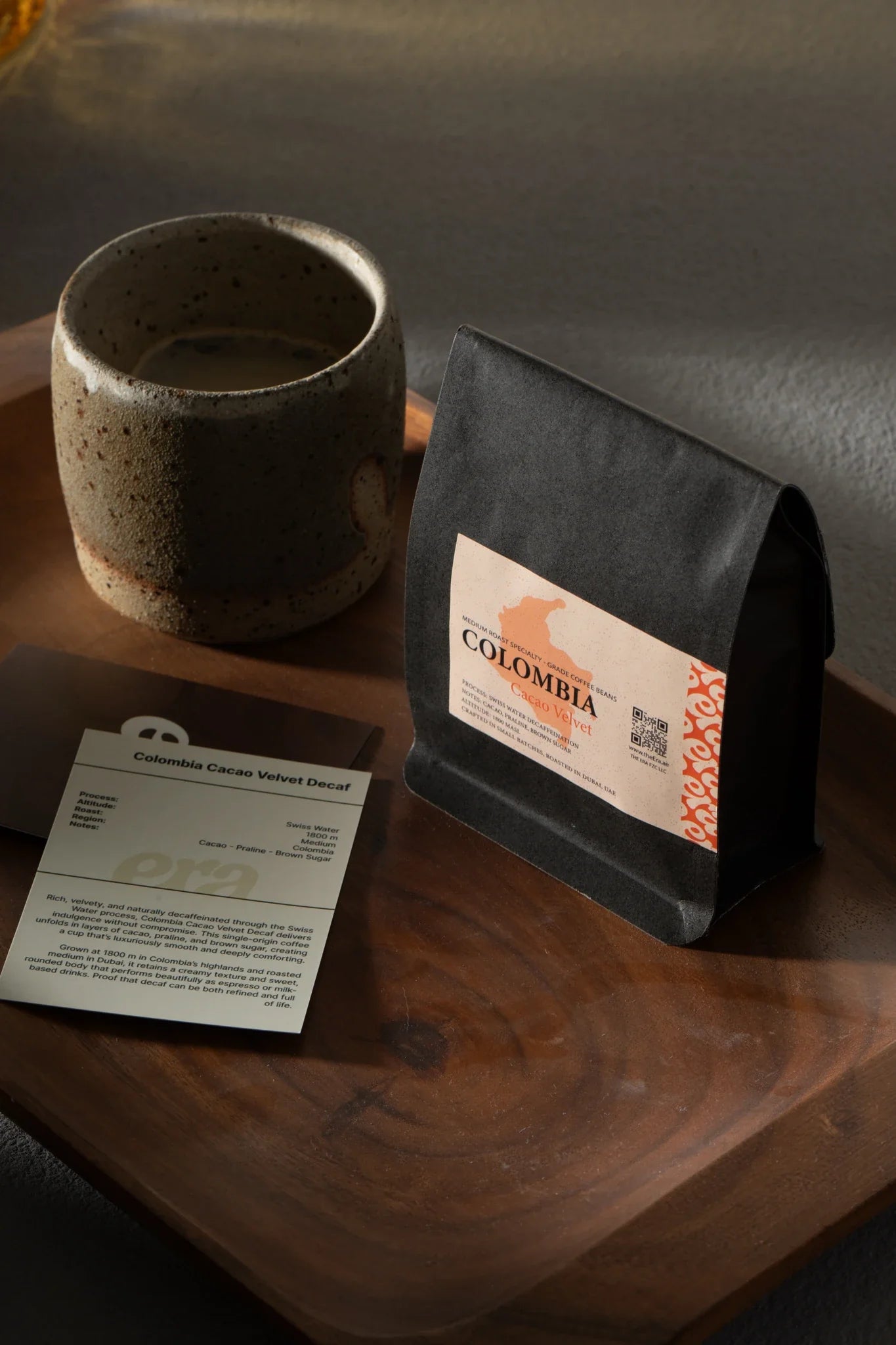
Why good decaf costs more. The Swiss Water process adds days of handling and a facility fee to every kilo, and it only makes sense to spend that on beans that were worth drinking in the first place. That's why great decaf starts with great coffee: our Colombia Cacao Velvet Decaf is a single origin from 1,800 metres in Colombia's highlands, Swiss Water processed, then roasted medium here in Dubai the same week you brew it. Cacao, praline, and brown sugar, with nothing missing but the caffeine.
Why Is Coffee So Expensive Right Now?
You've probably noticed it at the cafe and on the shelf. Coffee has been through its most dramatic price surge in living memory, and it's worth understanding why, because the story sounds remarkably like what's happening to matcha.
Climate hit the biggest producers hard. Brazil grows roughly a third of the world's coffee, so when severe drought and erratic weather cut into consecutive Brazilian harvests, and Vietnam's robusta crop suffered at the same time, global inventories thinned out fast.
Prices broke a 47-year record. In early 2025, arabica futures surged past 4 dollars per pound to all-time highs, above the peaks of every previous coffee crisis. Prices eased from those records as a huge 2026 Brazilian harvest came into view, then jumped again mid-2026 on harvest delays and El Nino worries. The market remains volatile and well above where it sat a few years ago.
Coffee trees can't hurry. Like tea bushes in Uji, a newly planted coffee tree needs three to five years before its first real harvest. Supply simply can't respond quickly, no matter how high prices climb. Add rising farming costs, an ageing farmer population in many origins, and shipping disruptions, and you get a structurally more expensive cup.
What it means for what's in your bag. When green coffee gets expensive, the commodity world quietly cuts corners: more robusta in the blend, darker roasts to mask lower grades, smaller pack sizes at the same price. Specialty pricing moves too, but it was never built on cheap beans in the first place; it was built on paying properly for quality. The gap in price between a great bag and a mediocre one has never been smaller, relatively speaking, and the gap in taste has never been bigger.
Our approach through all of it stays the same: buy quality-focused lots, roast weekly in small batches so nothing sits around, and never pad a blend to protect a margin. You'd taste it if we did, and that's exactly the point.
What Does Good Coffee Taste Like? (And Why Blueberry Isn't Flavouring)
First, the question we get asked most: no, nothing is added. When a bag says blueberry, jasmine, or dark chocolate, those are tasting notes, flavours naturally present in the bean thanks to its variety, altitude, processing, and roast, the same way a Medjool date tastes of caramel and toffee without a drop of either added.
Genuinely good, freshly roasted specialty coffee tastes like this: sweet, properly sweet, from fully ripe cherries and careful roasting, no sugar required; clean, each flavour distinct, no mustiness, no harsh edges; alive with acidity, not sourness, but the juicy brightness that makes a cup refreshing rather than flat; aromatic, with florals, fruit, chocolate, or spice depending on origin and roast; and long in the finish, the taste that stays pleasant after the sip, instead of turning bitter or papery.
And origin really does speak. An Ethiopian heirloom lot leans floral and citrus-bright. A Brazilian natural leans chocolate, hazelnut, and round sweetness. A Colombian high-grown lot rounds out the trio, structured and sweet with cacao and praline depth. Taste them side by side, our sample pack exists for exactly this, and you'll never again believe coffee is one flavour.
If your coffee tastes only bitter, something upstream went wrong: stale beans, over-roasting, or defective cherries hiding under a dark roast. Bitterness isn't coffee's personality. It's coffee's warning light.
How Much Caffeine Is in Coffee? Coffee vs Matcha
A standard cup of arabica filter coffee carries roughly 95 to 120mg of caffeine, and a single espresso shot around 60 to 80mg, though bean, dose, and brew method all move the number. Robusta-heavy blends can carry far more, which is rarely the compliment it sounds like.
And since the question always follows: is coffee good for you? The research picture is genuinely reassuring. Coffee is one of the largest sources of antioxidants in most people's diets, and large long-term studies have consistently associated moderate consumption, around three to four cups a day, with lower risks of heart disease, type 2 diabetes, and liver conditions. Associations aren't guarantees, and coffee is a drink, not a prescription, but the days of feeling guilty about a daily habit are well behind us. The roughly 400mg of caffeine generally considered fine for healthy adults per day translates to roughly four cups of filter or five espressos.
Coffee's caffeine arrives fast and peaks hard, which is exactly what most of us want at 7am. The flip side is the mid-afternoon crash, and the sleep cost of a late cup: caffeine lingers in the body for hours, so that 5pm espresso is still working at midnight.
This is where our two obsessions divide the day between them. Matcha carries less caffeine per serving, around 40 to 90mg, but pairs it with L-theanine, an amino acid that smooths the curve into calm, sustained focus. We wrote a full comparison in our matcha guide, but the short version we live by: coffee for the bold morning kickstart, matcha for the afternoon, and a good night's sleep as the quiet third product we sell.
How to Brew Better Coffee at Home
You don't need a cafe setup to make coffee dramatically better. You need fresh beans, a decent grinder, and three habits.
1. Grind just before brewing. Ground coffee stales in minutes, not weeks; grinding shatters the bean's cells and exposes everything to oxygen at once. A modest home grinder with fresh beans beats pre-ground from the world's best roastery, every single time. If you buy one piece of equipment, make it a grinder.
2. Weigh, don't scoop. Coffee rewards consistency. As a starting point, use a ratio around 1:15 to 1:17 for filter methods, so 20g of coffee to roughly 300 to 320ml of water. For espresso, a 1:2 ratio, around 18g in and 36g out in 25 to 30 seconds, is the classic starting point. Adjust to taste from there: finer grind and longer contact for more strength, coarser and shorter for less.
3. Mind your water. Coffee is more than 98% water, and water in our region is often heavily filtered or remineralised. Freshly drawn, good-tasting water just off the boil, around 92 to 96°C, makes a visible difference. If your water tastes flat from the tap, your coffee will too.
And one freshness habit that ties it together: buy in quantities you'll finish within a few weeks of the roast date, not months. A smaller bag of this week's roast will always out-drink a big bag of last quarter's.
What Equipment Do You Actually Need?
People assume great coffee at home starts with an expensive machine. It doesn't. It starts with a grinder, and everything after that depends on how you like to drink.
Level one: the non-negotiables. A burr grinder and a small scale. Burrs crush beans to a consistent size (blade grinders smash them into dust and boulders, which extract unevenly), and the scale turns luck into repeatability. This pair, plus fresh beans, outperforms any automatic machine fed with pre-ground.
Level two: pick your brewer. No machine required. A pour over cone, French press, or AeroPress costs little, lasts years, and with our filter roasts produces cups that embarrass most cafes. This is the highest flavour-per-dirham route in coffee.
Level three: the espresso path. When you're ready for proper espresso at home, the machine and the grinder matter equally; a brilliant machine can't fix an inconsistent grind. We stock and stand behind the brands we'd put in our own kitchens, from approachable Sage setups to Lelit and the La Marzocco machines cafes build their counters around, plus Mahlkönig grinders and Puqpress tampers, all in our machines collection. If you're choosing a first machine, message us with how you drink (straight espresso or milk, one cup or a household's worth) and we'll point you honestly, including when the honest answer is the cheaper option.
The milk corner. If lattes and flat whites are your thing, milk texture is half the drink. A precision pitcher and a tool like the NanoFoamer get you silky microfoam without a steam wand, and a dosing cup keeps espresso prep tidy and consistent. You'll find all of them among our coffee accessories.
Why Does My Coffee Taste Sour, Bitter, or Flat?
Almost every disappointing cup is one of three problems, and each has a direction to turn the dial. Learn this and you can fix any brew in two attempts.
Sour, sharp, or thin? Under-extracted: the water didn't pull enough from the grounds. Grind finer, brew a little longer, or use hotter water. For espresso, sour shots that run fast mean the grind is too coarse.
Bitter, harsh, or drying? Over-extracted: the water pulled too much. Grind coarser, shorten the brew, or drop the temperature slightly. For espresso, bitter shots that drip slowly mean the grind is too fine.
Flat, dull, papery? That's not extraction, that's freshness. Stale beans, pre-ground coffee, or a bag long past its roast date will taste lifeless no matter how well you brew. No grind setting fixes time. Check the roast date, and if the bag doesn't have one, you've found the culprit.
The professional habit worth stealing: change one variable at a time, taste, then adjust again. Coffee rewards small moves.
How to Store Coffee Beans (Especially in the Gulf)
Coffee shares matcha's four enemies: air, light, heat, and humidity. Living here, we deal with the last two at industrial strength, so storage matters more in Dubai than it does in Oslo.
The golden rules: keep beans in a sealed, opaque container at room temperature, in a cupboard away from the oven, the window, and the kettle. Our bags have one-way valves and reseal well; an airtight canister like the Airscape, which pushes the air out rather than sealing it in, is the upgrade for daily drinkers, and you'll find it among our coffee accessories.
Don't refrigerate opened beans. This surprises people, especially after our matcha advice, but coffee and matcha differ here. A fridge opened daily bathes porous roasted beans in humidity and food aromas every time the container comes out, and condensation is the killer. Cool, dry, and dark beats cold and damp.
The freezer is for the long game only. If you genuinely must store coffee for months, portion it into small airtight containers, freeze once, and thaw each portion fully sealed before opening. Never refreeze, and never take one scoop from a frozen bag and put it back.
Never leave coffee in the car. A parked car in a UAE summer is an oven. Twenty minutes can undo a roaster's whole week.
Buy whole bean, grind daily. Storage buys you weeks. Grinding fresh is what spends them well.
How long do beans last? For peak flavour, drink within about a month of the roast date, ideally starting in that 7 to 14 day sweet spot. Sealed and stored well, beans stay enjoyable for two to three months. Beyond that they're safe, just quieter, and coffee this good deserves to be heard.
How to Spot Stale or Low-Quality Coffee
Your field guide to reading a bag before you buy it, and a cup before you finish it.
Signs of the good stuff: a roast date, printed clearly, recent, and worn like a badge; origin transparency, with country, region, ideally the farm or washing station, plus variety and process; 100% arabica, stated, not implied; whole beans with a matte to lightly satin surface and a strong, sweet aroma when the bag is opened; a one-way valve on the bag, the sign of a roaster who packs fresh coffee that's still degassing; and tasting notes that commit to something specific, because vague coffee gets vague descriptions.
Red flags: only a best-before date, usually set one to two years out, which tells you nothing about when it was roasted and everything about how the brand thinks; very shiny, oily beans in the bag, usually a very dark roast, often past its prime; pre-ground as the only option; no species, no origin, no process, just adjectives; aroma that's faint, flat, or papery when you open the bag; and a price that seems impossible, because after the price surges of the last two years, genuinely cheap coffee is cheap for a reason, and the reason is in the cup.
The single best test: brew it black, no sugar, no milk, and taste it. Great coffee is sweet on its own. Bad coffee needs rescuing.
About the Coffee We Roast at Era
At Era, coffee and matcha are two expressions of the same belief: obsess over the source, respect the craft, and never cut corners.
Our coffee is roasted here in Dubai, every week, in small, carefully measured batches, each one monitored from first crack to final cooling. Every origin is roasted individually to highlight its natural sweetness, structure, and body, guided by experience, timing, and sensory cues rather than automation. After roasting, each batch is cooled and rested naturally until the flavours settle, then sealed in airtight, one-way valve bags that are fully recyclable.
Every bag carries its roast date, full transparency, and a simple promise: you're brewing inside the ideal window, typically 7 to 14 days after roast, when flavour and structure reach their peak.
The current line-up spans the classic origins, each roasted to its strengths: Ethiopia Guji Hambela, heirloom varieties from coffee's birthplace, floral and vivid; Brazil Vale Dourado, rich, chocolatey comfort built for espresso and milk; and Colombia Cacao Velvet Decaf, proof that decaf finally deserves respect. Find them all among our specialty beans.
And because the whole point is drinking coffee inside its peak window, a subscription puts freshness on autopilot: this week's roast, at your door, before last week's bag runs out.
Chosen from the best farms, roasted weekly, crafted in small batches, and built on the belief that precision creates beauty. Bold mornings, calm afternoons. From farm to form.
Frequently Asked Questions
What makes coffee specialty?
A grade, not a slogan: beans scoring 80+ out of 100 under Specialty Coffee Association standards, with no primary defects, full traceability, and careful processing from farm to roaster.
Why is coffee so expensive in 2026?
Climate-damaged harvests in Brazil and Vietnam drove arabica prices to all-time records in 2025, and the market has stayed high and volatile since. Coffee trees take three to five years to mature, so supply can't respond quickly.
How long do coffee beans stay fresh?
Peak flavour sits roughly 7 to 14 days after the roast date, and beans stay excellent for about a month when sealed and stored cool, dry, and dark. Always buy bags with a printed roast date.
Should I keep coffee beans in the fridge?
No. Daily fridge trips cause condensation and aroma absorption. A sealed, opaque container in a cool cupboard is best; the freezer only works for long-term storage in sealed portions you thaw once.
Is espresso stronger than filter coffee?
Per millilitre, yes; per serving, usually not. A single espresso carries around 60 to 80mg of caffeine, while a full cup of filter carries roughly 95 to 120mg.
What is the difference between espresso beans and filter beans?
The roast profile. Espresso roasts are developed for short, intense, high-pressure extraction and milk drinks. Filter roasts are lighter, preserving florals, fruit, and clarity for gentler brew methods. Omni roasts are balanced to do both.
Are flavours like blueberry or chocolate added to the coffee?
Never, not in specialty coffee. Tasting notes describe flavours naturally created by the bean's variety, altitude, processing, and roast, the same way dates or honey carry natural tasting notes.
Arabica vs robusta, what is the difference?
Arabica is the high-altitude species behind virtually all specialty coffee: sweeter, more aromatic, more refined. Robusta is hardier and carries about twice the caffeine but tastes harsher; it dominates instant coffee and cheap blends.
Why does my espresso taste sour?
Sour means under-extracted: the grind is too coarse or the shot ran too fast. Grind finer and aim for roughly a 1:2 ratio in 25 to 30 seconds. Bitter is the opposite problem, so grind coarser.
Is coffee good for you?
Research consistently associates moderate intake, around three to four cups daily, with lower risks of several chronic conditions, and coffee is a major dietary source of antioxidants. Around 400mg of caffeine a day is generally considered fine for healthy adults.
Is coffee or matcha better for energy?
They're different tools. Coffee delivers a faster, stronger caffeine hit; matcha pairs moderate caffeine with L-theanine for smoother, longer-lasting focus. Many people, ourselves included, use coffee for mornings and matcha for afternoons.
How is decaf coffee made?
The caffeine is removed from the green bean before roasting. The best method, the Swiss Water process, uses no chemical solvents: beans soak in a flavour-saturated green coffee extract that draws out only the caffeine, leaving the bean 99.9% caffeine-free with its character intact.
Does decaf coffee have caffeine?
A little. Swiss Water decaf is 99.9% caffeine-free, which works out to roughly 2 to 5mg per cup versus 95 to 120mg in regular coffee, about twenty decafs to equal one regular cup.
Ready to taste what fresh actually means? Explore our weekly-roasted specialty beans, or start with the sample pack and let the origins introduce themselves. And when the afternoon comes, you know where the matcha is.