By The Era Store, small-batch specialty roasters in Dubai.
Few drinks carry as much history in a small cup as Turkish coffee. It's thick, rich, crowned with foam, and served with the grounds still settling at the bottom. For nearly five centuries it has been the drink of welcome across Turkey, the Balkans, and the Middle East, and today it's having a second life with specialty roasters.
This guide covers what Turkish coffee is, why it's called Turkish, how it spread around the world, and how to make it properly at home, one cup at a time or a full pot.
- What it is
- Why it's called Turkish
- How it spread
- Turkish coffee today
- How to make it
- Caffeine and benefits
- Turkish vs Arabic vs espresso
- FAQ
What Is Turkish Coffee?
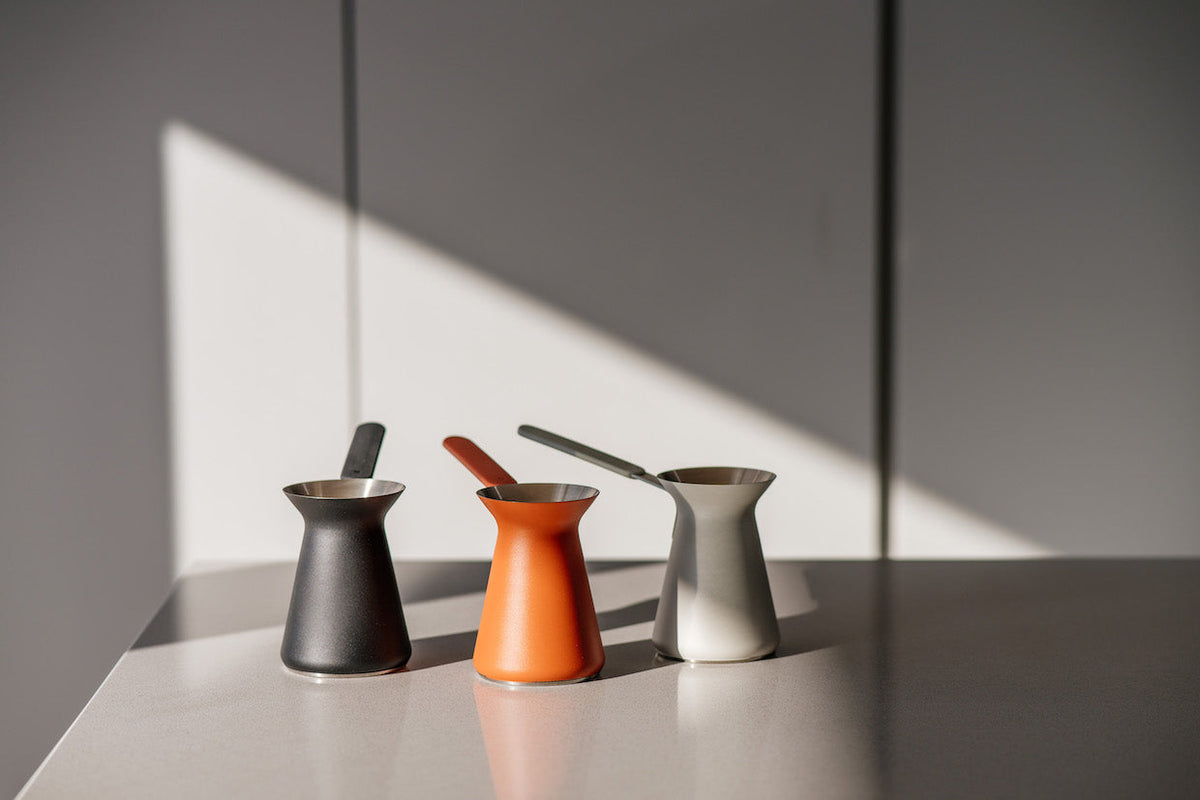
Turkish coffee isn't a type of bean or a roast. It's a way of brewing. Coffee is ground extra fine, finer than espresso and almost like powder, then simmered slowly with cold water, and sugar if you take it, in a small long-handled pot called a cezve. Nothing is filtered. The coffee is poured straight into small cups, the grounds settle at the bottom, and you sip the rich coffee above them.
Three things make it different from any other cup: the very fine grind, which gives it its thick, velvety body; the slow heat, which builds a layer of foam on top; and the fact that it's served unfiltered, so all of the coffee's oils stay in the cup.
Why Is It Called Turkish Coffee?
Coffee doesn't grow in Turkey. The name comes from the method, which took shape in Ottoman Istanbul.
Coffee began in Ethiopia and was first brewed as a drink in Yemen, where it was known as qahwa. In the 16th century, the Ottoman Empire's reach extended to Yemen, and the drink traveled north to the capital. The story most often told is that Özdemir Pasha, the Ottoman governor of Yemen, brought coffee to the court of Sultan Suleiman the Magnificent around the 1540s, and it quickly became a favorite at the palace. The court even had its own chief coffee maker, the kahvecibaşı.
In the mid-1550s, two Syrian merchants, Hakam from Aleppo and Shams from Damascus, opened what's recorded as Istanbul's first public coffeehouse in the Tahtakale district. Coffeehouses spread across the city, and the Ottoman way of making coffee, finely ground and simmered in a cezve, became known to the rest of the world as Turkish coffee. The Turkish word for coffee, kahve, comes from the Arabic qahwa.
In 2013, Turkish coffee culture and tradition were added to UNESCO's list of the world's intangible cultural heritage.
How Turkish Coffee Spread
The Ottoman coffeehouse, the kahvehane, was more than a place to drink. It was where people met, talked, played games, listened to storytellers, and watched shadow puppet shows. It became the city's social heart, open to people from every walk of life.
From Istanbul, coffee followed trade routes into Europe. Venetian merchants who had tasted it in Istanbul carried it home, and Venice's first coffeehouse opened in 1645. London, Paris, and Vienna followed within a few decades. Many of the world's coffee traditions, including the café itself, trace back to the Ottoman coffeehouse.
Across the former Ottoman lands, the same method lives on under different names. In Greece it's Greek coffee, in Bosnia it's Bosnian coffee, and in much of the Levant it's simply coffee, served the same way.
Turkish Coffee Today
Turkish coffee is still the drink of hospitality. It's traditionally served with a glass of water, to cleanse the palate first, and often a piece of Turkish delight. An old Turkish saying goes that one cup of coffee is remembered for forty years, a reminder that it's as much about the company as the coffee.
It also carries a few traditions of its own. Some families still read fortunes in the grounds left in an upturned cup. In Turkey, when a family visits to ask for a bride's hand, the bride-to-be traditionally makes the coffee, and sometimes slips salt into the groom's cup to see how he takes it.
Today, specialty roasters are giving Turkish coffee a fresh look. Instead of dark, bitter supermarket blends, they use quality beans roasted to bring out sweetness, so the cup tastes smooth rather than harsh. That's the idea behind our Athar Turkish Coffee: specialty Brazilian coffee, freshly roasted in Dubai and ground extra fine, with notes of cocoa, toasted hazelnut, and dried fruit. The name Athar is the Arabic word for a trace, the mark something leaves behind.
How to Make Turkish Coffee at Home
You need finely ground Turkish coffee, cold water, a cezve, and small cups. There are two easy ways to make it, depending on how many cups you need.
One or two cups, any cezve
- Measure. For each cup, add about 7g of coffee, roughly one heaped teaspoon, and 70ml of cold water to the cezve. Add sugar now if you take it, and a pinch of ground cardamom if you like it spiced.
- Stir once. Mix until all the coffee is wet, then stop stirring.
- Heat slowly. Warm it on low to medium heat. Never let it boil.
- Catch the foam. As the foam rises toward the rim, take it off the heat and spoon a little foam into each cup.
- Pour and rest. Return it to the heat for a few seconds so it rises once more, then pour slowly. Let the cup settle for a minute so the grounds sink before you sip.
A full pot, about 5 cups
This is Goat Story's recipe for the OTTO, a modern 550ml cezve that works on every stovetop, including induction.
- Add 30g of Turkish coffee, plus sugar or cardamom if you like.
- Heat 330ml of water to about 65°C.
- Mix the coffee and warm water in the OTTO until all the coffee is wet.
- Heat at medium without stirring.
- When the foam reaches the top of the pot, it's ready. Pour slowly and let it settle.
A few tips: sugar goes in at the start, never after, since you can't stir the finished cup without disturbing the grounds. Ask guests how sweet they like it before you brew. And always use freshly roasted coffee, because finely ground coffee loses its aroma quickly.
Caffeine and Benefits
A small cup of Turkish coffee has roughly as much caffeine as a single espresso, so it's strong in flavor without being an especially large dose.
Like other coffee, it naturally contains antioxidants. Because it's unfiltered, it also keeps more of the coffee's natural oils, which give it its rich body. Those oils contain compounds that can raise cholesterol in some people when unfiltered coffee is drunk in large amounts, so if that's a concern for you, enjoy it in moderation and check with your doctor. For most people, a cup or two is simply one of the most enjoyable ways to drink coffee.
Turkish Coffee vs Arabic Coffee vs Espresso
Turkish coffee is ground extra fine, simmered in a cezve, and served unfiltered with a layer of foam and the grounds at the bottom of the cup.
Arabic coffee, or gahwa, is usually a much lighter roast, ground coarser, often brewed with cardamom or saffron in a dallah, and poured clear into small cups, a gesture of welcome in every Emirati majlis.
Espresso uses a fine grind too, but forces hot water through the coffee under pressure in about 30 seconds and filters it, giving a concentrated shot with crema. If espresso is your thing, our home espresso guide covers it in depth.
Frequently Asked Questions
What is Turkish coffee?
Coffee ground extra fine and simmered with water, and sugar if you like, in a small pot called a cezve, then served unfiltered with the grounds settling at the bottom of the cup.
Why is it called Turkish coffee?
Because the method took shape in Ottoman Istanbul in the 16th century, after coffee arrived from Yemen. Coffee doesn't grow in Turkey. The name refers to how it's made, not where the beans come from.
Is Turkish coffee strong?
It's strong in flavor and body, but a small cup has roughly as much caffeine as a single espresso.
Do you stir Turkish coffee?
Only once, at the start, to wet the coffee. Add sugar at the same time, then let it heat without stirring so the foam can form.
Why is Turkish coffee served with water?
Traditionally, you sip the water first to cleanse your palate so you taste the coffee fully.
Can I add cardamom to Turkish coffee?
Yes. Add a pinch of ground cardamom to the pot with the coffee before heating. Our Athar is plain, so you can choose.
What's the difference between Turkish and Arabic coffee?
Turkish coffee is ground extra fine and served unfiltered with foam. Arabic coffee, or gahwa, is usually a lighter roast, ground coarser, often brewed with cardamom or saffron in a dallah, and poured clear.
Ready to brew? Start with Athar Turkish Coffee, find everything you need in our Turkish coffee collection, and read more about where coffee comes from in our specialty coffee guide.