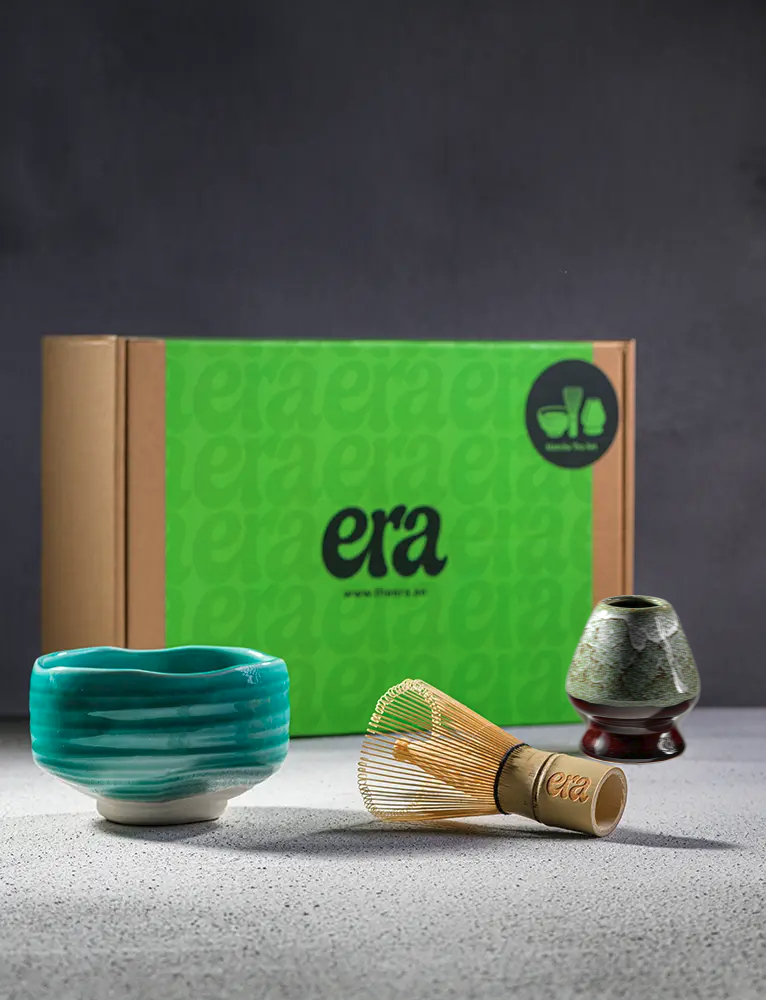
By The Era Store, small-batch specialty roasters in Dubai and suppliers of ceremonial grade Uji matcha.
The short answer: cup for cup, coffee usually has more caffeine than matcha. A traditional bowl of matcha has about 40 to 90mg, while a double-shot flat white or a mug of filter coffee lands around 95 to 160mg. Matcha also tends to feel calmer and steadier, which is why so many people switch to it for the afternoon.
We roast coffee and we sell matcha, so we get asked this all the time, usually by someone holding one and wondering about the other. The honest answer is that neither is better. They do different jobs, and once you know how much caffeine is in each drink and why they feel so different, it gets easy to choose. Pick the question you came for, or read it top to bottom.
Jump to Your Question
- Caffeine drink by drink
- Why matcha feels different
- What changes caffeine in matcha
- What changes caffeine in coffee
- Which to drink, and when
- Dirty matcha
- How much is too much?
- Our matcha and coffee
- FAQ
How Much Caffeine Is in Matcha vs Coffee, Drink by Drink?
Comparing "matcha" with "coffee" doesn't tell you much, because a single espresso and a large filter coffee are very different drinks. This is what you're actually getting in the cups people drink most.
| Drink | Caffeine (approx.) |
|---|---|
| Traditional bowl of matcha2g matcha | 40 to 90mg |
| Matcha latte3g matcha | 60 to 130mg |
| Single espresso1 shot | 60 to 80mg |
| Flat white, cappuccino or latte2 shots | 120 to 160mg |
| Filter coffee or pour over240ml cup | 95 to 120mg |
| Decaf espresso1 shot | A few mg |
These are ranges, not exact numbers. Matcha carries roughly 19 to 44mg of caffeine per gram depending on the leaf, and coffee varies with the bean, the dose, and how it's brewed. But the pattern holds: a bowl of matcha sits close to a single espresso, and most coffee shop orders, made with two shots, carry more.
The one thing that flips it is quantity. A big matcha latte made with 4 or 5g of powder can match a double-shot coffee. If you want less caffeine from matcha, use less matcha. Our guide to making matcha and a matcha latte at home shows how to measure a proper serving.
Why Does Matcha Feel Different From Coffee?
Ask people who drink both and most say the same thing: coffee hits fast and drops off, while matcha feels smoother and lasts longer, without the jittery edge. There are two main reasons.
L-theanine. Shade-grown tea leaves are naturally rich in L-theanine, an amino acid that is also behind matcha's sweet, savory umami. Research suggests that L-theanine taken together with caffeine supports calm, focused alertness and may soften the restless side of caffeine. Coffee contains none.
You drink the whole leaf. With brewed tea, you steep the leaves and throw them away. With matcha, the leaf is stone-ground into powder and whisked into water, so you take in everything the leaf contains, not just what dissolves.
Everyone reacts to caffeine differently, and some people find matcha just as strong as coffee. But if coffee leaves you wired, anxious, or crashing mid-afternoon, matcha is the first thing worth trying.
What Changes the Caffeine in Your Matcha?
How much you use. This matters more than anything else. A traditional bowl uses 2g. A latte uses 3g. A heaped teaspoon is 4 to 5g, which is roughly double a traditional serving, and the most common way people end up with more caffeine than they expected.
The grade. Ceremonial matcha is made from the young, shaded leaves of the first harvest, which tend to carry more caffeine and more L-theanine than the older leaves used for culinary matcha. If you're curious how the two compare, read ceremonial vs culinary matcha.
Water temperature doesn't change much. Unlike brewed tea, you drink all of the powder, so the caffeine ends up in your cup either way. Water around 70 to 80°C matters for taste, not caffeine.
Freshness. Old or badly stored matcha loses its color, sweetness, and aroma long before anything else. Keep it sealed and in the fridge. Our matcha storage guide covers how.
What Changes the Caffeine in Your Coffee?
The number of shots. Most specialty cafes in the UAE make their drinks with a double shot as standard. A cappuccino isn't a light coffee just because it's small.
The dose and the brew. More coffee in means more caffeine out. A large filter coffee or a cold brew made strong can easily pass 150 to 200mg.
The bean. Arabica, which almost all specialty coffee is, carries roughly 1.2 to 1.5% caffeine. Robusta, used in a lot of instant coffee and commercial blends, carries close to double that.
Roast level, less than you think. Dark roast tastes stronger but doesn't carry more caffeine. Roasting barely changes caffeine content. Measured by the scoop, a light roast can even have slightly more, because the beans are denser.
New to specialty coffee? Our complete guide covers origins, roasts, and freshness.
Matcha or Coffee: Which Should You Drink, and When?
There's no rule, but this is how a lot of our customers end up doing it.
Morning: whichever you love. If you need to be sharp fast, coffee does that well. If you want to start slower and stay steady, matcha.
Afternoon: this is where matcha shines. You get a lift for the rest of the workday with less chance of a crash or a sleepless night.
Evening: caffeine stays in your body for hours. Many sleep experts suggest stopping around six hours before bed. If you want the ritual later on, a decaf espresso is the answer.
In the summer heat: both work iced. An iced matcha latte is lighter and more refreshing for a lot of people, while an iced coffee is the stronger hit.
During Ramadan: some people find matcha gentler at suhoor. Either way, keep it to one cup and drink plenty of water alongside it.
What Is Dirty Matcha?
A dirty matcha is a matcha latte with a shot of espresso poured on top. It's become one of the most popular drinks on cafe menus, and it's easy to make at home: whisk 3g of matcha with 50 to 60ml of water, pour it over ice and 150ml of milk, then top with a single espresso.
It tastes better than it sounds. The chocolatey, nutty notes of a coffee like Brazil Vale Dourado sit well with matcha's sweetness. Just know what's in it: roughly 120 to 210mg of caffeine, more than most coffees on their own.
How Much Caffeine Is Too Much?
For most healthy adults, food safety authorities put the safe limit at around 400mg a day. It would take four bowls of matcha or more to reach that, or around three double-shot coffees. During pregnancy the usual guidance is to stay under 200mg a day.
Those are general limits, not targets. Sensitivity varies a lot from person to person, and if you're pregnant, on medication, or have a heart condition, check with your doctor about what's right for you.
The Matcha and Coffee We Sell at Era
Era Ceremonial Matcha is first-harvest ceremonial grade matcha from Uji, Kyoto, stone-ground and flown to the UAE within days of grinding. It's kept refrigerated from grinding until it ships, and it comes in aluminum tins of 30g and 100g. Smooth, sweet, and deeply green, it works as a traditional bowl or in a latte.
Our coffee is specialty coffee, freshly roasted in small batches with the roast date printed on every bag. Browse our specialty beans, or if you're cutting back, try Colombia Cacao Velvet Decaf for espresso and milk drinks.
Frequently Asked Questions
Does matcha have more caffeine than coffee?
Usually not. A traditional bowl of matcha has about 40 to 90mg of caffeine, while a double-shot coffee or a cup of filter coffee has around 95 to 160mg. A matcha latte made with a lot of powder can come close to a coffee.
How much caffeine is in a matcha latte?
A matcha latte made with 3g of matcha has roughly 60 to 130mg of caffeine. The milk doesn't change the caffeine, only the amount of matcha does.
Does matcha give you jitters?
Most people find it much gentler than coffee. Matcha contains L-theanine, an amino acid that research suggests supports calm focus alongside caffeine. Using too much powder can still make you jittery, so stick to 2 to 3g a serving.
Is matcha or coffee better for focus?
Many people find matcha better for long stretches of focus because it feels steadier, while coffee works faster. It comes down to how your body responds to each.
Can I drink matcha at night?
Matcha contains caffeine, so it can affect sleep just like coffee. Try to have your last cup around six hours before bed.
What is dirty matcha?
A matcha latte topped with a shot of espresso. It carries roughly 120 to 210mg of caffeine, more than most coffees on their own.
Does dark roast coffee have more caffeine?
No. Roasting barely changes caffeine content. Dark roast tastes stronger, but measured by the scoop a light roast can have slightly more caffeine.
How much caffeine is safe per day?
Around 400mg a day for most healthy adults, and under 200mg a day during pregnancy. Check with your doctor if you're pregnant, on medication, or sensitive to caffeine.
Want to try the calmer cup? Start with Era Ceremonial Matcha and our step-by-step guide to your first bowl. For the full story behind matcha, read the complete guide to matcha.